
Hundreds of Palestinians Have ‘Disappeared’ at the Hands of Assad’s Secret Police Thugs
 |
| Ali Al Shihabi |
Most
supporters of the Palestinians and anti-imperialists support Syria against its Islamic
opponents, Al Nusra and ISIS and oppose imperialist attempts to intervene in
the civil war. But there is a danger
that in defending the Syrian regime and people against imperialism that one
will defend its truly appalling and atrocious human rights record.
It was
noteworthy that Jeremy Bowen of the BBC’s interview with President Bashar al-Assad
last week, there was no mention of human rights and the torture and disappearance
of opponents and perceived opponents of the regime, not least its attack on Palestinians.
noteworthy that Jeremy Bowen of the BBC’s interview with President Bashar al-Assad
last week, there was no mention of human rights and the torture and disappearance
of opponents and perceived opponents of the regime, not least its attack on Palestinians.
Socialists
and anti-imperialists should not make the mistake of saying that the enemy of
my enemy is my friend. Assad would make
his peace with imperialism at a moment’s notice, as Iran is attempting to do,
if he could. However he is surrounded by
regimes which want to see his downfall, not least Turkey, Israel and Saudi
Arabia.
and anti-imperialists should not make the mistake of saying that the enemy of
my enemy is my friend. Assad would make
his peace with imperialism at a moment’s notice, as Iran is attempting to do,
if he could. However he is surrounded by
regimes which want to see his downfall, not least Turkey, Israel and Saudi
Arabia.
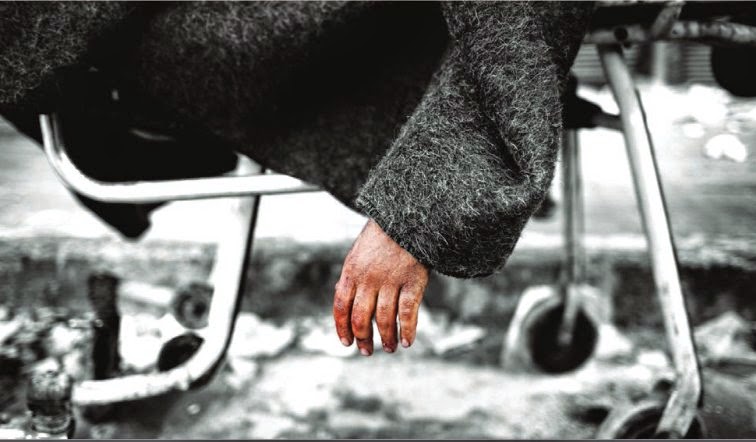 |
| Victim of Torture |
When
the United States was rendering prisoners one of its favourite destinations was
Syria, whose torture of prisoners was notorious for its brutality. Maher Arar, a Canadian citizen was rendered
at New York’s JFK airport and sent to Syria where he was tortured. He later received $10.5 m compensation from
the Canadian government and an apology from its Prime Minister Stephen Harper [see
Syria has made a curious transition from US ally to violator of human
rights Mehdi Hasan http://www.theguardian.com/commentisfree/2012/feb/19/syria-us-ally-human-rights].
Soon after US officials attacked Syria’s human rights record.
the United States was rendering prisoners one of its favourite destinations was
Syria, whose torture of prisoners was notorious for its brutality. Maher Arar, a Canadian citizen was rendered
at New York’s JFK airport and sent to Syria where he was tortured. He later received $10.5 m compensation from
the Canadian government and an apology from its Prime Minister Stephen Harper [see
Syria has made a curious transition from US ally to violator of human
rights Mehdi Hasan http://www.theguardian.com/commentisfree/2012/feb/19/syria-us-ally-human-rights].
Soon after US officials attacked Syria’s human rights record.
Hezbollah
is in particular involved in fighting on behalf of Assad’s regime. Its reasons being to preserve an Iranian ally
which allows the shipment of weapons to Lebanon. However in the longer term Hezbollah, which
is Israel’s main enemy in the region (being the only Arab group to have defeated
Israel militarily) faces being isolated, especially if Iran makes its peace
with the USA.
is in particular involved in fighting on behalf of Assad’s regime. Its reasons being to preserve an Iranian ally
which allows the shipment of weapons to Lebanon. However in the longer term Hezbollah, which
is Israel’s main enemy in the region (being the only Arab group to have defeated
Israel militarily) faces being isolated, especially if Iran makes its peace
with the USA.
Tony
Greenstein
Greenstein
18 February 2015
 |
|
Palestinians who fled Syria protest in Gaza City in October 2013.
|
Aidah Tayem, a Palestinian woman from Yarmouk refugee camp near
Damascus now living in the occupied West Bank village of Beitin near Ramallah,
has gone through a lifetime of trials.
Damascus now living in the occupied West Bank village of Beitin near Ramallah,
has gone through a lifetime of trials.
She was hardly seventeen when her father was imprisoned
by Syrian security forces in Damascus during the 1980s for his affiliation with
the Fatah party which
had split with the government. She quickly became the head of the family,
running her father’s business and supporting her younger siblings.
by Syrian security forces in Damascus during the 1980s for his affiliation with
the Fatah party which
had split with the government. She quickly became the head of the family,
running her father’s business and supporting her younger siblings.
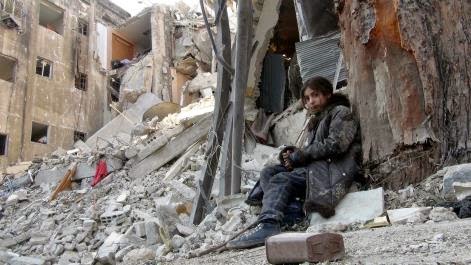 |
| Only few thousand Palestinians left in Yarmouk |
Among only a handful of Palestinian refugees in Syria
who received permits from the Palestinian Authority to enter the West Bank, her
parents were among the Palestinians who came there after the signing of the
Oslo accords in the 1990s.
who received permits from the Palestinian Authority to enter the West Bank, her
parents were among the Palestinians who came there after the signing of the
Oslo accords in the 1990s.
She appears incredibly tough but behind her stoic demeanor
is a woman clutching at the straws of hope — the hope of kissing her eldest
son, Oday.
is a woman clutching at the straws of hope — the hope of kissing her eldest
son, Oday.
Oday
Tayem, a 21-year-old Palestinian refugee born and raised in Yarmouk, was
detained by Syrian security forces in August 2013 during an evening raid on his
home in Jaramana, southeast of Damascus. Oday was an activist — “peaceful” is
the description emphasized to this writer by his friends — and contributed to
relief work both in Yarmouk refugee camp and in other besieged areas. This is
believed to be the reason for his arrest.
Tayem, a 21-year-old Palestinian refugee born and raised in Yarmouk, was
detained by Syrian security forces in August 2013 during an evening raid on his
home in Jaramana, southeast of Damascus. Oday was an activist — “peaceful” is
the description emphasized to this writer by his friends — and contributed to
relief work both in Yarmouk refugee camp and in other besieged areas. This is
believed to be the reason for his arrest.
Since he was taken into custody, his family has yet to
receive any confirmed news regarding his whereabouts. Aidah knows too well what
it’s like to have a loved one languishing in political detention; after all,
her father was imprisoned for ten years, most of them spent in the notorious
Tadmor desert prison.
receive any confirmed news regarding his whereabouts. Aidah knows too well what
it’s like to have a loved one languishing in political detention; after all,
her father was imprisoned for ten years, most of them spent in the notorious
Tadmor desert prison.
But it’s the scarcity of information that makes Oday’s
absence even more excruciating. When Oday’s favorite song pops up on her phone,
Aidah hangs on to his picture as tears well up in her eyes.
absence even more excruciating. When Oday’s favorite song pops up on her phone,
Aidah hangs on to his picture as tears well up in her eyes.
Aidah is among many women who, as Syrian journalist
Jihad Asa’ad Muhammad writes,
“do not seek consideration or sympathy from anyone. They ask for only one
thing: to know the whereabouts of their forcibly disappeared loved ones.”
Jihad Asa’ad Muhammad writes,
“do not seek consideration or sympathy from anyone. They ask for only one
thing: to know the whereabouts of their forcibly disappeared loved ones.”
It is impossible to estimate the number of Palestinians
detained in Syria. The Syrian government doesn’t provide any data regarding
political prisoners. Neutral local or international monitoring and human rights
groups, including the International Committee of the Red Cross, are not granted
access to the numerous prisons and detention facilities across the country.
detained in Syria. The Syrian government doesn’t provide any data regarding
political prisoners. Neutral local or international monitoring and human rights
groups, including the International Committee of the Red Cross, are not granted
access to the numerous prisons and detention facilities across the country.

And many families keep quiet about the detention of
their loved ones. They stay anonymous, fearing the repercussions and backlash
of publicity both on them and on the prisoners.
their loved ones. They stay anonymous, fearing the repercussions and backlash
of publicity both on them and on the prisoners.
The Action Group for Palestinians in Syria, a London-based
monitoring organization founded in 2012, has documented the names of
756 Palestinians currently being detained and nearly 300 more missing.
monitoring organization founded in 2012, has documented the names of
756 Palestinians currently being detained and nearly 300 more missing.
Death under torture
The vast majority of prisoners documented are held in
the various detention facilities run by the Syrian government, but some are
detained by jihadist or armed opposition groups. One of those is Bahaa Hussein
from Yarmouk, detained by Jabhat al-Nusra in late January for blasphemy.
the various detention facilities run by the Syrian government, but some are
detained by jihadist or armed opposition groups. One of those is Bahaa Hussein
from Yarmouk, detained by Jabhat al-Nusra in late January for blasphemy.
The same group has recorded the death under torture
of 291 Palestinians in Syrian government detention since the beginning of the
Syrian uprising in March 2011. Each of them has a face and a story, but very
few of them have made the news.
of 291 Palestinians in Syrian government detention since the beginning of the
Syrian uprising in March 2011. Each of them has a face and a story, but very
few of them have made the news.
Among them is Khaled Bakrawi, a
prominent activist and cofounder of the Jafra Association for Aid and
Development, which works to improve conditions in Palestinian refugee camps in
Syria.
prominent activist and cofounder of the Jafra Association for Aid and
Development, which works to improve conditions in Palestinian refugee camps in
Syria.
A refugee from Lubya, Bakrawi was active around
Palestinian refugee rights well before the uprising began and was shot by
Israeli occupation forces in June 2011 during the Naksa
Day march to the occupied Syrian Golan Heights. But after masses of
displaced Syrians sought refuge in Yarmouk, he directed his efforts towards
organizing humanitarian aid to them.
Palestinian refugee rights well before the uprising began and was shot by
Israeli occupation forces in June 2011 during the Naksa
Day march to the occupied Syrian Golan Heights. But after masses of
displaced Syrians sought refuge in Yarmouk, he directed his efforts towards
organizing humanitarian aid to them.
Bakrawi’s friends
told me that he was arrested by Syrian security forces in January 2013 and
his family learned
of his death in September of that year. One of the most tragic aspects of
death in Syrian prisons is that families are not even allowed to pay a final
farewell glance to their dead and their bodies are not delivered back to them.
Instead they are called up by security services only to claim the ID cards and
the personal possessions of slain prisoners. Not only is it believed that
Bakrawi was tortured to death, but his family and friends couldn’t even bury
him or give him a proper funeral.
told me that he was arrested by Syrian security forces in January 2013 and
his family learned
of his death in September of that year. One of the most tragic aspects of
death in Syrian prisons is that families are not even allowed to pay a final
farewell glance to their dead and their bodies are not delivered back to them.
Instead they are called up by security services only to claim the ID cards and
the personal possessions of slain prisoners. Not only is it believed that
Bakrawi was tortured to death, but his family and friends couldn’t even bury
him or give him a proper funeral.
Unlike Bakrawi, Samira Sahli was not a known activist,
but some details of her life are known from a profile
published by the independent news site Siraj Press. A mother of four, Sahli
regularly cooked for displaced Syrians filling Yarmouk’s schools back when the
camp was still a refuge for people fleeing violence in neighboring areas. As
siege intensified, she and her kids, like the 20,000 residents trapped inside
the camp, relied on the sparse food aid sporadically allowed in.
but some details of her life are known from a profile
published by the independent news site Siraj Press. A mother of four, Sahli
regularly cooked for displaced Syrians filling Yarmouk’s schools back when the
camp was still a refuge for people fleeing violence in neighboring areas. As
siege intensified, she and her kids, like the 20,000 residents trapped inside
the camp, relied on the sparse food aid sporadically allowed in.
According to Siraj Press, the 53-year-old was arrested
at a government checkpoint while going to receive her food basket. Five months
later, her family was informed of her death, making her the first Palestinian
woman known to be killed in regime prisons since 2011.
at a government checkpoint while going to receive her food basket. Five months
later, her family was informed of her death, making her the first Palestinian
woman known to be killed in regime prisons since 2011.
“Tortured in the name of Palestine”
In an interview with The Electronic Intifada conducted
via Skype, Abu Julia, a Palestinian activist who sought asylum in Germany at
the end of 2013, where he remains, gave a glimpse into the horrors faced in
Syrian regime jails.
via Skype, Abu Julia, a Palestinian activist who sought asylum in Germany at
the end of 2013, where he remains, gave a glimpse into the horrors faced in
Syrian regime jails.
The 29-year-old asked to be identified as Abu Julia in
reference to the name of his first-born. When he was arrested by Syrian
security forces, his daughter Julia was only five months old. He was arrested
in October 2012 and released a year later, but there were moments when he
thought he’d never live to see her again.
reference to the name of his first-born. When he was arrested by Syrian
security forces, his daughter Julia was only five months old. He was arrested
in October 2012 and released a year later, but there were moments when he
thought he’d never live to see her again.
Abu Julia told the Electronic Intifada that he faced
eighteen charges, the most serious of which was inciting against the state, as
well as charges related to working in makeshift hospitals; sowing division and
fueling chaos in Yarmouk camp; working with local coordination committees;
making contacts with foreign agents and aiding the wounded.
eighteen charges, the most serious of which was inciting against the state, as
well as charges related to working in makeshift hospitals; sowing division and
fueling chaos in Yarmouk camp; working with local coordination committees;
making contacts with foreign agents and aiding the wounded.
“I was held in a detention center called ‘Palestine,’
which is a security branch established by Hafez al-Assad specifically for
Palestinian factions in Syria,” he said, referring to the father of the current
head of state. “That’s the most painful thing: being tortured in the name of
Palestine.”
which is a security branch established by Hafez al-Assad specifically for
Palestinian factions in Syria,” he said, referring to the father of the current
head of state. “That’s the most painful thing: being tortured in the name of
Palestine.”
Abu Julia recalls being “welcomed” with a beating as
soon as he entered the branch. He was placed in Cell One, which held 48
prisoners upon his entry. Detainees crammed in the 36-square meter cell reached
as many as 120 in the hours before Abu Julia’s release.
soon as he entered the branch. He was placed in Cell One, which held 48
prisoners upon his entry. Detainees crammed in the 36-square meter cell reached
as many as 120 in the hours before Abu Julia’s release.
“Following the first interrogation, which included
beating with electric wires, I was told to forget my name. They handed me the
number 16/1,” he recalled. “When you get in you lose everything: you lose your
name, your confidence in people, in your family and in yourself. You lose your
hope and love for life even though you hang on by the hope of returning to
life.
beating with electric wires, I was told to forget my name. They handed me the
number 16/1,” he recalled. “When you get in you lose everything: you lose your
name, your confidence in people, in your family and in yourself. You lose your
hope and love for life even though you hang on by the hope of returning to
life.
“You are stripped of your feelings and turned into an
animal who is only allowed to eat and drink, and even sleep is only permitted
by a military order. Perhaps the only thing you don’t lose is your ability to
dream while asleep.”
animal who is only allowed to eat and drink, and even sleep is only permitted
by a military order. Perhaps the only thing you don’t lose is your ability to
dream while asleep.”
The decisive day of Abu Julia’s life came two days after
his arrest. Following the interrogation in which he refused to make a
confession, the interrogator ordered his torture for a week in the narrow
corridors near the cells, he recalled.
his arrest. Following the interrogation in which he refused to make a
confession, the interrogator ordered his torture for a week in the narrow
corridors near the cells, he recalled.
“I was hung in the air several hours each day and I was
subjected to whips and burns,” he explained in graphic detail. The physical
torture was accompanied with cursing, such as being called “Palestinian dog,”
and being told “we hosted you in our country and now you betray us, traitor.”
subjected to whips and burns,” he explained in graphic detail. The physical
torture was accompanied with cursing, such as being called “Palestinian dog,”
and being told “we hosted you in our country and now you betray us, traitor.”
The week of torture in the corridors, in which Abu Julia
remembers that at least six inmates were killed, was followed by another,
longer round of torture after he refused to confess to any of the charges
again.
remembers that at least six inmates were killed, was followed by another,
longer round of torture after he refused to confess to any of the charges
again.
As Abu Julia meticulously detailed what he went through,
it was hard not to wonder how he actually coped with all of this.
it was hard not to wonder how he actually coped with all of this.
Defiance
“You know what really made me survive? My
Palestinianness. This feeling of being Palestinian is what helped me persevere
throughout all of this. Somehow, Palestinians would be on the verge of death
and remain defiant,” he said.
Palestinianness. This feeling of being Palestinian is what helped me persevere
throughout all of this. Somehow, Palestinians would be on the verge of death
and remain defiant,” he said.
For Abu Julia, this feeling, this added
“Palestinianness” he found after his detention was not a cliché but an actual
harbor. “It was a kind of response we developed during times of need. We drew
strength and solace out of being Palestinian. When we were tortured or faced
the interrogator, we just reminded ourselves that we are Palestinian,” he
added.
“Palestinianness” he found after his detention was not a cliché but an actual
harbor. “It was a kind of response we developed during times of need. We drew
strength and solace out of being Palestinian. When we were tortured or faced
the interrogator, we just reminded ourselves that we are Palestinian,” he
added.
After ten months in the Palestine branch, Abu Julia was
transferred to Adra, the central prison in Damascus, and when he was moved from
the car that transported him to a military court that he saw sunshine for the
first time in ten months.
transferred to Adra, the central prison in Damascus, and when he was moved from
the car that transported him to a military court that he saw sunshine for the
first time in ten months.
“I spent nearly a month and a half in Adra before being
released … and then I hugged Julia; she was able to walk and say baba and
mama,” he recalled.
released … and then I hugged Julia; she was able to walk and say baba and
mama,” he recalled.
Even while telling his harrowing story, Abu Julia still
cracked jokes. “I weighed 129 kg when I was arrested and was only 65 kg when I
was released. This free diet is the only good thing that happened to me there,”
he said.
cracked jokes. “I weighed 129 kg when I was arrested and was only 65 kg when I
was released. This free diet is the only good thing that happened to me there,”
he said.
Meanwhile, Ammar, Aidah Tayem’s son and Oday’s seventeen-year-old
brother, is still hoping for his brother and best friend to get out.
brother, is still hoping for his brother and best friend to get out.
“I’m waiting. Actually waiting for him is the only thing
I’m doing.”
I’m doing.”
Waiting is the punishing ordeal to which thousands of
Palestinians and Syrians are sentenced.
Palestinians and Syrians are sentenced.
Budour Youssef Hassan is a Palestinian anarchist and law
graduate based in occupied Jerusalem. She can be followed on Twitter: @Budour48.
graduate based in occupied Jerusalem. She can be followed on Twitter: @Budour48.
Posted in Blog
