
Even Alan Dershowitz, Israeli apologist supreme, says that the Deportations
have ‘a whiff of racism’ about them
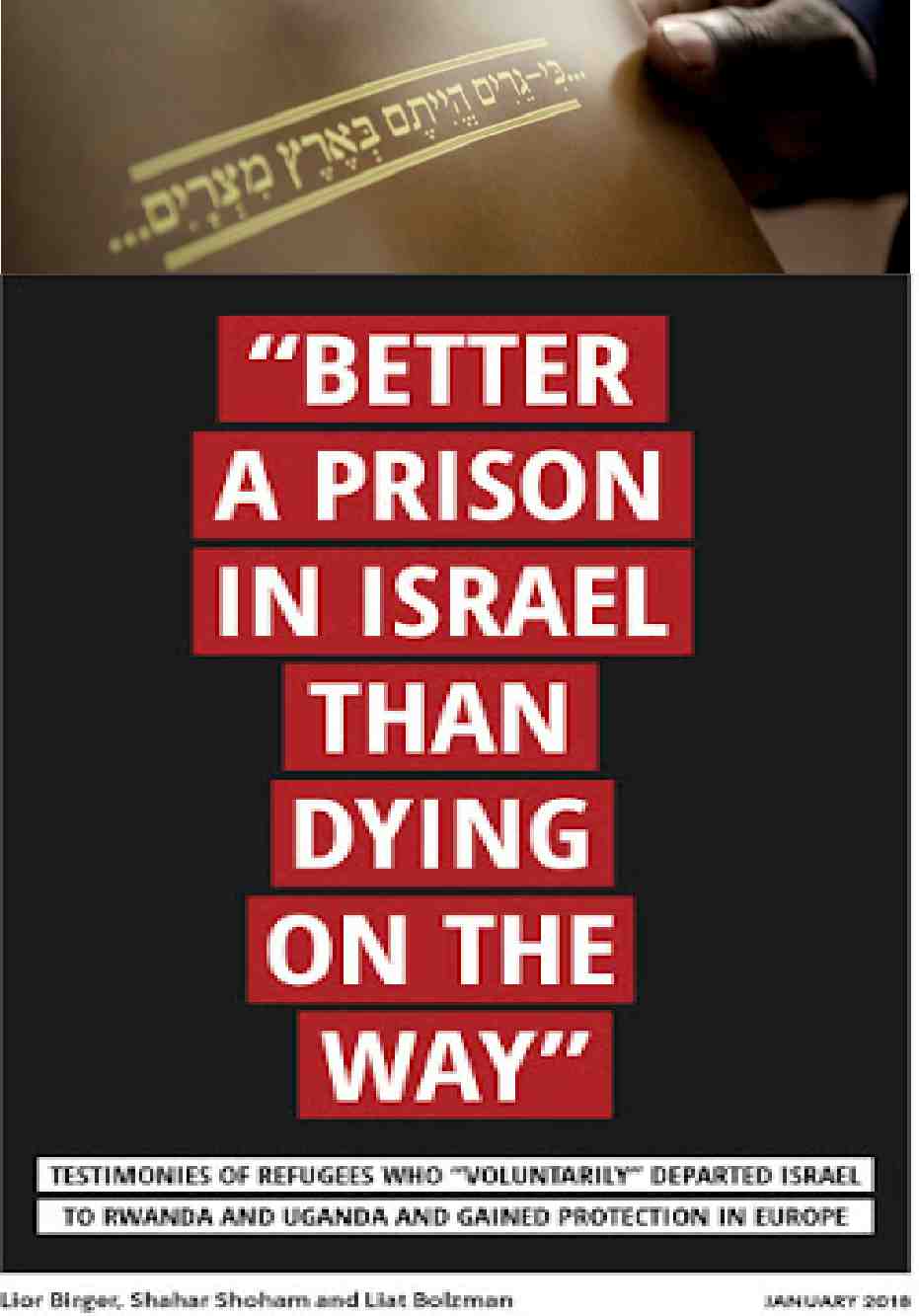
Testimonies
of refugees who left Israel for Rwanda and Uganda and received protection in
Europe”
The proposed expulsion of Israel’s Black African
refugees is proving highly embarrassing to the Zionists & Israeli apologists. It demonstrates like little else the inherent
racism in the ‘Jewish’ state. It is impossible to argue that the refugees
are a ‘security threat’ or the other excuses which are applied to the
Palestinians.
refugees is proving highly embarrassing to the Zionists & Israeli apologists. It demonstrates like little else the inherent
racism in the ‘Jewish’ state. It is impossible to argue that the refugees
are a ‘security threat’ or the other excuses which are applied to the
Palestinians.
The only reason for the deportations is, as
Netanyahu and the Right freely admit, because they are not Jewish. Added to that they are not
White. Whereas one-third of the million
Russian immigrants who came in the 1980’s weren’t Jewish they were at least
White.
Netanyahu and the Right freely admit, because they are not Jewish. Added to that they are not
White. Whereas one-third of the million
Russian immigrants who came in the 1980’s weren’t Jewish they were at least
White.

As Jonathan Freedland, the archetypal ‘liberal’
Zionist has been forced to admit, in an article Benjamin Netanyahu’s appalling betrayal of Jewish values,
Zionist has been forced to admit, in an article Benjamin Netanyahu’s appalling betrayal of Jewish values,
‘the desire to
be rid of these African newcomers has been mired in plain racism from the
start. Recall that, in 2012, Likud’s Miri Regev, now the culture minister,
referred to them as a “cancer.” She eventually apologised for the comparison —
to people living with cancer.’
be rid of these African newcomers has been mired in plain racism from the
start. Recall that, in 2012, Likud’s Miri Regev, now the culture minister,
referred to them as a “cancer.” She eventually apologised for the comparison —
to people living with cancer.’
Of course Freedland is unable to make the connection between this ‘plain racism‘ and the equally plain racism that pervades every aspect of Israeli society and the Zionist ideology that lies behind it.
 |
| African migrants protest outside Supreme Court |
Freedland
quoted the testimony of Emanuel Yemani, an Eritrean refugee who described his
conversation with an Israeli immigration official. He was told that
quoted the testimony of Emanuel Yemani, an Eritrean refugee who described his
conversation with an Israeli immigration official. He was told that
“soon we’ll
deport all of you, and you’ll sit under a tree, open your mouth and wait for a
banana to fall, like a monkey.”
deport all of you, and you’ll sit under a tree, open your mouth and wait for a
banana to fall, like a monkey.”
“But I’m a
human being, not a monkey,” Yemani answered.
human being, not a monkey,” Yemani answered.
“Don’t you
see yourselves, that you look like monkeys?” the official replied.
see yourselves, that you look like monkeys?” the official replied.
This is the sentiment that drives the expulsion of Israel’s African refugees. But whereas such views are confined to
the fascist margins of Western society , in Israel they are centre stage.
the fascist margins of Western society , in Israel they are centre stage.

Netanyahu was quite clear that the refugees pose a
threat to Jewish identity. In May 2012 he told Israel’s cabinet meeting
that:
threat to Jewish identity. In May 2012 he told Israel’s cabinet meeting
that:
“If we don’t stop their
entry, the problem that currently stands at 60,000 could grow to 600,000, and
that threatens our existence as a Jewish and democratic state. This phenomenon
is very grave and threatens the social fabric of society, our national security
and our national identity.”
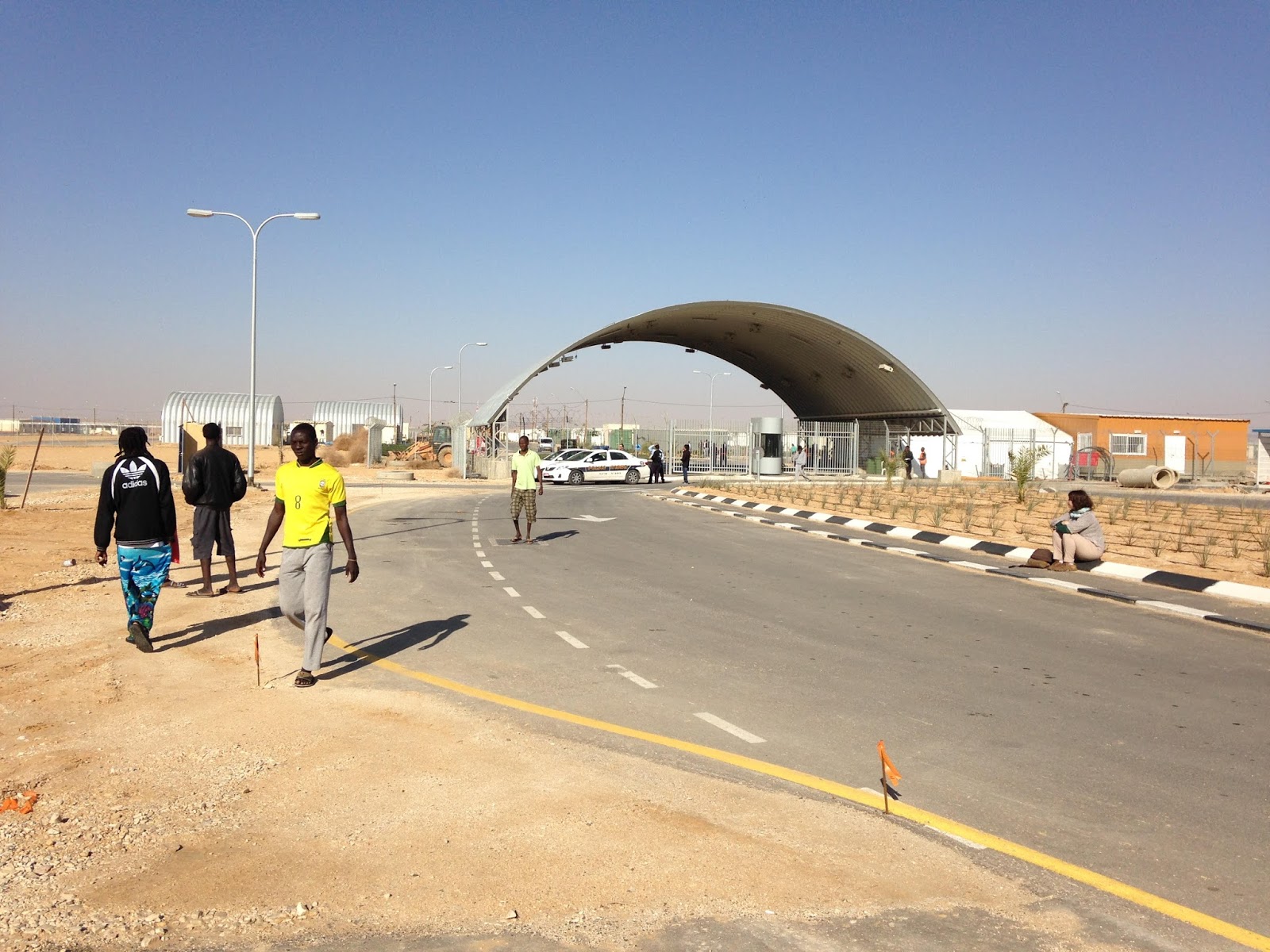 |
| African refugees in Israel |
By his
logic, Netanyahu is correct. Because
what is a Jewish state other than a state with a Jewish demographic majority? Contrary to nationalist myths, states do not have an ‘identity’ or values. That is why the ‘British values’ that lie
behind the Prevent programme are so much hot air.
logic, Netanyahu is correct. Because
what is a Jewish state other than a state with a Jewish demographic majority? Contrary to nationalist myths, states do not have an ‘identity’ or values. That is why the ‘British values’ that lie
behind the Prevent programme are so much hot air.
Below is an
article on the economic imperative behind the expulsions. There is a powerful lobby that wishes to
replace the labour of the Africans with those of Filipinos who have no rights,
either of residence or citizenship and
thus provide a pool of constant cheap labour.
article on the economic imperative behind the expulsions. There is a powerful lobby that wishes to
replace the labour of the Africans with those of Filipinos who have no rights,
either of residence or citizenship and
thus provide a pool of constant cheap labour.
I have included a number of articles below, on various aspects of this crisis, which is an important one in the stage of the further degeneration of Israel.
Profiteers for Expulsion: Brokers Want Africans Out, Filipinos in
The brokers who bring ‘Filipina’ caregivers to
Israel- and make them pay a hefty fee- don’t want the asylum seekers corrupting
their business models. This is hypocrisy at its finest
Israel- and make them pay a hefty fee- don’t want the asylum seekers corrupting
their business models. This is hypocrisy at its finest
Ha’aretz Feb 05, 2018 1:00 AM
 |
| FILE PHOTO: A ‘Filipina’ caregiver and an elderly Israeli |
Opinion
MANILA –
Millions of Filipino nationals work outside their country. It’s an important
economic sector here; the money they send home constitutes 10 percent of the
country’s gross national product. In some countries they work in construction,
in others as cooks, while in Israel, as they well know here, “Filipina”
generally describes the caregiver taking care of a frail grandparent or
disabled child.
Millions of Filipino nationals work outside their country. It’s an important
economic sector here; the money they send home constitutes 10 percent of the
country’s gross national product. In some countries they work in construction,
in others as cooks, while in Israel, as they well know here, “Filipina”
generally describes the caregiver taking care of a frail grandparent or
disabled child.
This
Filipina cooks and cleans, does the shopping and pushes the wheelchair for the
daily outing, and also bathes her charge and takes care of bathroom needs. She
works all day and is also present at night – the equivalent of at least two
full-time jobs. Yet very few Israeli households employ two Filipinas. As a
result, their workday almost never ends.
Filipina cooks and cleans, does the shopping and pushes the wheelchair for the
daily outing, and also bathes her charge and takes care of bathroom needs. She
works all day and is also present at night – the equivalent of at least two
full-time jobs. Yet very few Israeli households employ two Filipinas. As a
result, their workday almost never ends.
For this
work, which few Israelis would be prepared to do, she gets minimum wage (from
which hundreds of shekels are deducted). And before the snide remarks about
“for them it’s a lot of money,” everyone should ask himself if he would agree
to do such work, under these conditions and for such a wage. Stories about
Filipinas who became millionaires after five years of changing adult diapers in
Holon are ridiculous exaggerations. That Filipina sends a substantial portion
of her wages to her family, including children and the elderly, who have
remained here. Sometimes it’s the main source of support for numerous people.
work, which few Israelis would be prepared to do, she gets minimum wage (from
which hundreds of shekels are deducted). And before the snide remarks about
“for them it’s a lot of money,” everyone should ask himself if he would agree
to do such work, under these conditions and for such a wage. Stories about
Filipinas who became millionaires after five years of changing adult diapers in
Holon are ridiculous exaggerations. That Filipina sends a substantial portion
of her wages to her family, including children and the elderly, who have
remained here. Sometimes it’s the main source of support for numerous people.
She will
also have to repay debts. To whom? To the broker and the employment agency that
placed her. According to the Kav La’Oved organization, the brokerage fees can
reach $10,000 or more, a huge sum in the Philippines. At best it will be a year
until the worker pays off her debts and can send money back to her family; at
worst it could be three years. According to employees’ testimony, around half
of the brokerage fees, which are illegal, end up in Israeli hands.
Incidentally, the increasing demand around the world for Filipina nurses has
created a serious nursing shortage in the Philippines, as 70 percent of
Filipina nursing school graduates end up working abroad.
also have to repay debts. To whom? To the broker and the employment agency that
placed her. According to the Kav La’Oved organization, the brokerage fees can
reach $10,000 or more, a huge sum in the Philippines. At best it will be a year
until the worker pays off her debts and can send money back to her family; at
worst it could be three years. According to employees’ testimony, around half
of the brokerage fees, which are illegal, end up in Israeli hands.
Incidentally, the increasing demand around the world for Filipina nurses has
created a serious nursing shortage in the Philippines, as 70 percent of
Filipina nursing school graduates end up working abroad.
These
employment arrangements through brokers are the force behind the expulsion of
the asylum
seekers in
Israel. After all, their work is needed; there’s hardly a restaurant or a
street corner where you won’t find an Eritrean washing dishes or sweeping. Most
of us don’t want to do this “dirty work” either. This means that the thousands
who will be expelled and left to their fate will undoubtedly be replaced by
other foreign workers, but this time they will arrive through employment
contractors who will take a fat cut.
employment arrangements through brokers are the force behind the expulsion of
the asylum
seekers in
Israel. After all, their work is needed; there’s hardly a restaurant or a
street corner where you won’t find an Eritrean washing dishes or sweeping. Most
of us don’t want to do this “dirty work” either. This means that the thousands
who will be expelled and left to their fate will undoubtedly be replaced by
other foreign workers, but this time they will arrive through employment
contractors who will take a fat cut.
These
contractors are well-connected to politicians and senior government officials.
When I chaired the Knesset Committee on Foreign Workers, I was astounded by the
vehement resistance to bringing workers to Israel through direct bilateral
agreements. I quickly understood that interested parties wanted workers
imported through brokers so they could make a fortune, and the government
acceded to this.
contractors are well-connected to politicians and senior government officials.
When I chaired the Knesset Committee on Foreign Workers, I was astounded by the
vehement resistance to bringing workers to Israel through direct bilateral
agreements. I quickly understood that interested parties wanted workers
imported through brokers so they could make a fortune, and the government
acceded to this.
Now they are
talking about bringing workers from the Philippines to replace the asylum
seekers at the restaurants and hotels. But Israel doesn’t have such an
agreement with the Philippines. If such workers are brought in, it would
contravene the state’s commitment to the High Court of Justice to employ
workers only under agreements, and would encourage exploitation.
talking about bringing workers from the Philippines to replace the asylum
seekers at the restaurants and hotels. But Israel doesn’t have such an
agreement with the Philippines. If such workers are brought in, it would
contravene the state’s commitment to the High Court of Justice to employ
workers only under agreements, and would encourage exploitation.
This is
hypocrisy at its peak. This government, which is sowing fear of foreigners, is
bringing in the most foreign workers. The more workers are brought in, the
greater the number of those who will remain permanently in Israel – a
completely natural process. Instead of accelerating the airlift from Manila or
Beijing, the African asylum seekers should be given work permits so they can
work in an orderly, supervised fashion, in accordance with all the rules. After
all, they are already working and their employers are satisfied with them. I
know this from conversations with hundreds of employers.
hypocrisy at its peak. This government, which is sowing fear of foreigners, is
bringing in the most foreign workers. The more workers are brought in, the
greater the number of those who will remain permanently in Israel – a
completely natural process. Instead of accelerating the airlift from Manila or
Beijing, the African asylum seekers should be given work permits so they can
work in an orderly, supervised fashion, in accordance with all the rules. After
all, they are already working and their employers are satisfied with them. I
know this from conversations with hundreds of employers.
So enough of
all this persecution, lies and incitement. These are human beings, they work
hard, their work is needed and there’s no reason to bring other foreigners to
replace them and enrich brokers with more illegal income.
all this persecution, lies and incitement. These are human beings, they work
hard, their work is needed and there’s no reason to bring other foreigners to
replace them and enrich brokers with more illegal income.
Shahar Shoham, Liat Bolzman and Lior Birger – presents a clear picture:
promises made by the State of Israel both in court and personally to those
leaving “voluntarily” about what awaits them upon reaching Rwanda and Uganda were
not kept. Instead of access to official claims of asylum and work permits,
upon landing in Rwanda their travel documents were taken from them. None of
them could access application possibilities to claim asylum. Thus, deprived of
any official documents, they were exposed to robbery, threats and imprisonment.
They were forced to proceed on to life-threatening journeys across South Sudan,
Sudan and Libya while seeking shelter. On their way they suffered trafficking
in person, imprisonment, the threat of being forcibly returned back
to Eritrea, harsh conditions of hunger, violence and slave-labor in Libya’s
torture camps, as well as a perilous crossing of the Mediterranean Sea from
Libya to Europe. They described a perilous journey permeated with an
all-encompassing fear of death haunted by imminent death. Many witnessed the
death of fellow travelers during the crossing of the Sahara Desert, in the
torture camps in Libya and as they drowned in the Mediterranean. Among the dead
were others who had those who left Israel “voluntarily.”
promises made by the State of Israel both in court and personally to those
leaving “voluntarily” about what awaits them upon reaching Rwanda and Uganda were
not kept. Instead of access to official claims of asylum and work permits,
upon landing in Rwanda their travel documents were taken from them. None of
them could access application possibilities to claim asylum. Thus, deprived of
any official documents, they were exposed to robbery, threats and imprisonment.
They were forced to proceed on to life-threatening journeys across South Sudan,
Sudan and Libya while seeking shelter. On their way they suffered trafficking
in person, imprisonment, the threat of being forcibly returned back
to Eritrea, harsh conditions of hunger, violence and slave-labor in Libya’s
torture camps, as well as a perilous crossing of the Mediterranean Sea from
Libya to Europe. They described a perilous journey permeated with an
all-encompassing fear of death haunted by imminent death. Many witnessed the
death of fellow travelers during the crossing of the Sahara Desert, in the
torture camps in Libya and as they drowned in the Mediterranean. Among the dead
were others who had those who left Israel “voluntarily.”
[In Rwanda] “Three days after our arrival,
this man picked us up from the airport told us, ‘you must leave for Uganda’. I
asked where are our documents and why must we leave? – He said that we must.”
this man picked us up from the airport told us, ‘you must leave for Uganda’. I
asked where are our documents and why must we leave? – He said that we must.”
(Gabriel, pseudonym, left Israel in October 2015 for Rwanda under the
“voluntary leave” procedure of the Israeli Population and Immigration
Authority)
“voluntary leave” procedure of the Israeli Population and Immigration
Authority)
[In Uganda] “One man takes out a big knife, and tells us ‘Give
us money or we’ll kill you’. They took everything we had, 3,500 dollars,
clothes, cellphone, they take everything. […] And we don’t know what to do…”
us money or we’ll kill you’. They took everything we had, 3,500 dollars,
clothes, cellphone, they take everything. […] And we don’t know what to do…”
(Dwight, pseudonym, left Israel for Rwanda under the “voluntary leave”
procedure of the Israeli Population and Immigration Authority}
procedure of the Israeli Population and Immigration Authority}
[In Sudan] They took us at night to prison. And I thought to
myself: ‘Those who do not pay, we will send them back to Eritrea.’ If I
return to Eritrea, what can I tell you? They’ll kill me. I was crying, I
was like a crazy person.”
myself: ‘Those who do not pay, we will send them back to Eritrea.’ If I
return to Eritrea, what can I tell you? They’ll kill me. I was crying, I
was like a crazy person.”
(Samson, pseudonym, left Israel in April 2016 and reached Rwanda under the
“voluntary leave” procedure of the Israeli Population and Immigration
Authority).
“voluntary leave” procedure of the Israeli Population and Immigration
Authority).
[In Libya] “You’re locked inside. Eat and sleep there. 800
people in a small room. Everything is dirty, everyone is sick, boys, girls.
I can’t talk about it. They beat you, threaten you, kill you quietly.”
people in a small room. Everything is dirty, everyone is sick, boys, girls.
I can’t talk about it. They beat you, threaten you, kill you quietly.”
(Samson, pseudonym, left Israel in 2016 for Rwanda under the “voluntary
leave” procedure of the Israeli Population and Immigration Authority. Now lives
in Holland, where he was granted refugee status).
leave” procedure of the Israeli Population and Immigration Authority. Now lives
in Holland, where he was granted refugee status).
[In the Mediterranean Sea] “I saw 400
people inside… the water, they drowned. I saw people got in and all of them
died on the boat. Nine boats went into the sea, we were before this ship, many
children died, I remember. I don’t have the strength anymore to talk about it.”
people inside… the water, they drowned. I saw people got in and all of them
died on the boat. Nine boats went into the sea, we were before this ship, many
children died, I remember. I don’t have the strength anymore to talk about it.”
(Johannes, pseudonym, left Israel in 2015 for Rwanda under the
“voluntary leave” procedure of the Israeli Population and Immigration
Authority. Now lives in Holland, where he was granted refugee status).
“voluntary leave” procedure of the Israeli Population and Immigration
Authority. Now lives in Holland, where he was granted refugee status).
Not only are the promises made to those leaving “voluntarily” not kept –
this report concludes that the implementation of deportations to a “a third
country” poses a grave threat to the mental wellbeing, safety and lives of men,
women and children. To this day, this policy has cost the lives of many who
reached Israel in the hope of finding shelter and did not find it there. It is
impossible to read the testimonies brought forth in this report otherwise; they
are a clear call to stop the looming deportation policy and regularize the
status of asylum-seekers residing in Israel.
this report concludes that the implementation of deportations to a “a third
country” poses a grave threat to the mental wellbeing, safety and lives of men,
women and children. To this day, this policy has cost the lives of many who
reached Israel in the hope of finding shelter and did not find it there. It is
impossible to read the testimonies brought forth in this report otherwise; they
are a clear call to stop the looming deportation policy and regularize the
status of asylum-seekers residing in Israel.
This report is based on interviews conducted with Eritrean refugees
who left Israel under the “Voluntary” Departure program to Rwanda and
Uganda. There – in contrast to the promises made to them by the State of Israel
– they were not granted protection, forcing them to embark on a dangerous
journey ending in Europe. This report focuses on the “Voluntary Departure”
policy and how it affected the lives of those who left Israel under it. This
policy has been implemented since late 2013 vis-à-vis Eritrean and Sudanese residing
in Israel. In January 2018, shortly before the publication of this report, the
State of Israel announced an escalation of the measures it implements against
this population; one such measure is a plan to forcibly deport asylum-seekers
to a third country, i.e., not their homeland.
who left Israel under the “Voluntary” Departure program to Rwanda and
Uganda. There – in contrast to the promises made to them by the State of Israel
– they were not granted protection, forcing them to embark on a dangerous
journey ending in Europe. This report focuses on the “Voluntary Departure”
policy and how it affected the lives of those who left Israel under it. This
policy has been implemented since late 2013 vis-à-vis Eritrean and Sudanese residing
in Israel. In January 2018, shortly before the publication of this report, the
State of Israel announced an escalation of the measures it implements against
this population; one such measure is a plan to forcibly deport asylum-seekers
to a third country, i.e., not their homeland.
The report is based on a qualitative research made up of 19
interviews with Eritrean refugees who left Israel between 2014-2016. 11
interviews were conducted in Germany and eight in the Netherlands, the
countries of residence of the interviewees, in which the overwhelming majority
received refugee status.
interviews with Eritrean refugees who left Israel between 2014-2016. 11
interviews were conducted in Germany and eight in the Netherlands, the
countries of residence of the interviewees, in which the overwhelming majority
received refugee status.
This conclusion is in congruence with findings of previous reports
published by Israeli and international NGOs that collected testimonies in
African countries of those who “voluntarily” departed Israel. These testimonies
were recently buttressed by a statement of the United Nations High Commissioner
on Refugees (UNHCR) about dozens of similar testimonies the agency collected in
Italy. Taken together, several hundreds of testimonies have been collected.
published by Israeli and international NGOs that collected testimonies in
African countries of those who “voluntarily” departed Israel. These testimonies
were recently buttressed by a statement of the United Nations High Commissioner
on Refugees (UNHCR) about dozens of similar testimonies the agency collected in
Italy. Taken together, several hundreds of testimonies have been collected.
Thus, the report confirms that the alarming patterns documented by
previous reports have not changed. In addition, this report, for the first
time, details additional stages in the journey of those who departed. Little
information was available about these legs of the journey – and especially
about what the interviewees experienced in Libya and during their crossing of
the Mediterranean Sea– until their arrival in Europe.
previous reports have not changed. In addition, this report, for the first
time, details additional stages in the journey of those who departed. Little
information was available about these legs of the journey – and especially
about what the interviewees experienced in Libya and during their crossing of
the Mediterranean Sea– until their arrival in Europe.
The authors are independent researchers with years of experience working
with refugee communities residing in Israel under the auspices of several NGOs:
with refugee communities residing in Israel under the auspices of several NGOs:
Lior
Birger, a PhD candidate for Social Work at the Hebrew University of Jerusalem
and a Fellow at the joint program of the Hebrew University and the Free University
of Berlin -“Human Rights Under Pressure”. Shahar Shoham, a PhD candidate for
Area and Global Studies at the Institute for Asian and African Studies ,
Humboldt University in Berlin and a grantee of the Hans-Böckler Foundation in
Germany. Liat Bolzman, an M.A. student for Social Work and Human Rights at the
Alice Salomon University in Berlin and a grantee of the Rosa Luxemburg
Foundation in Germany. “The harsh testimonies brought in this report clearly
show the brutal ramifications of Israel’s official policy towards refugees,”
say Shoham, Bolzman and Birger. “They prove that the promises made by Israel’s
government to those leaving regarding what they are about to face in Rwanda and
Uganda – are lies.
Birger, a PhD candidate for Social Work at the Hebrew University of Jerusalem
and a Fellow at the joint program of the Hebrew University and the Free University
of Berlin -“Human Rights Under Pressure”. Shahar Shoham, a PhD candidate for
Area and Global Studies at the Institute for Asian and African Studies ,
Humboldt University in Berlin and a grantee of the Hans-Böckler Foundation in
Germany. Liat Bolzman, an M.A. student for Social Work and Human Rights at the
Alice Salomon University in Berlin and a grantee of the Rosa Luxemburg
Foundation in Germany. “The harsh testimonies brought in this report clearly
show the brutal ramifications of Israel’s official policy towards refugees,”
say Shoham, Bolzman and Birger. “They prove that the promises made by Israel’s
government to those leaving regarding what they are about to face in Rwanda and
Uganda – are lies.
The people who testified us emphasized that although they
have found shelter and protection in Europe, they feel obliged to expose the
truth about the perilous journey they were forced to undertake. They said,
furthermore, that ‘not another human being should suffer the horrors
inflicted on us.’
have found shelter and protection in Europe, they feel obliged to expose the
truth about the perilous journey they were forced to undertake. They said,
furthermore, that ‘not another human being should suffer the horrors
inflicted on us.’
We join the many voices of protest presently raised, and call upon the
Government of Israel to revoke its decision, to truly and fairly examine the
claims for asylum and protection, and to stop deporting asylum-seekers to
places in which, instead of protection, expose them to violence, torture and
the peril of death.”
Government of Israel to revoke its decision, to truly and fairly examine the
claims for asylum and protection, and to stop deporting asylum-seekers to
places in which, instead of protection, expose them to violence, torture and
the peril of death.”
Everything
You Need to Know About Israel’s Mass
Deportation of Asylum Seekers
The government plan to send 20,000 back to Africa
by 2020 has sparked anger and controversy, raising basic questions about
Israel’s duty as a nation founded by refugees
by 2020 has sparked anger and controversy, raising basic questions about
Israel’s duty as a nation founded by refugees
Ha’aretz Feb 07, 2018 9:56 AM
A
demonstration against deportation by asylum seekers from Sudan and Eritrea, in
Tel Aviv, in December. Tomer Appelbaum
demonstration against deportation by asylum seekers from Sudan and Eritrea, in
Tel Aviv, in December. Tomer Appelbaum
In a
controversial move that has made the news domestically and abroad, Israel
began sending out deportation notices to thousands of
African asylum seekers this week. It is giving
them a stark choice: leave the country or face going to prison for an
indefinite period.
controversial move that has made the news domestically and abroad, Israel
began sending out deportation notices to thousands of
African asylum seekers this week. It is giving
them a stark choice: leave the country or face going to prison for an
indefinite period.
This is the
culmination of over a decade of the government trying to get a handle on the
issue. It calls the asylum seekers “infiltrators” because they entered the
country illegally, and claims most are economic migrants. However, the Africans say they are fleeing
persecution in their homelands and are entitled to refugee status.
culmination of over a decade of the government trying to get a handle on the
issue. It calls the asylum seekers “infiltrators” because they entered the
country illegally, and claims most are economic migrants. However, the Africans say they are fleeing
persecution in their homelands and are entitled to refugee status.
In a country
founded as a refuge for Jews fleeing persecution, the situation has raised a
fundamental question: What is the Jewish state’s obligation to others, even if
they are not Jewish? The issue is especially pressing today, with the world
gripped by its worst refugee crisis since World War II.
founded as a refuge for Jews fleeing persecution, the situation has raised a
fundamental question: What is the Jewish state’s obligation to others, even if
they are not Jewish? The issue is especially pressing today, with the world
gripped by its worst refugee crisis since World War II.
Asylum seekers in Israel: A Timeline. Eliyahu
Hershkovitz
Hershkovitz
The
deportations are scheduled to start in early April, during the Jewish holiday
of Passover, which commemorates the
Israelites’ escape from slavery in Egypt.
deportations are scheduled to start in early April, during the Jewish holiday
of Passover, which commemorates the
Israelites’ escape from slavery in Egypt.
Here we
explain the key issues concerning the African asylum seekers in Israel, and why
the matter has become such a hot-button topic both in Israel and for Diaspora Jews.
explain the key issues concerning the African asylum seekers in Israel, and why
the matter has become such a hot-button topic both in Israel and for Diaspora Jews.
Who are these asylum seekers?
In the
mid-2000s, with the African states of Sudan and Eritrea racked by unrest and
violence – and, in the case of the Darfur region of Sudan, even attempted
genocide – some citizens chose to flee.
mid-2000s, with the African states of Sudan and Eritrea racked by unrest and
violence – and, in the case of the Darfur region of Sudan, even attempted
genocide – some citizens chose to flee.
They
embarked on a hazardous journey that eventually led them from Egypt’s Sinai
Desert into Israel, paying Bedouin smugglers to get them over the border and in
some cases arriving with tales of torture and rape that they endured along the
way.
embarked on a hazardous journey that eventually led them from Egypt’s Sinai
Desert into Israel, paying Bedouin smugglers to get them over the border and in
some cases arriving with tales of torture and rape that they endured along the
way.
The first to
arrive, in 2005, were mostly fleeing ethnic violence in Sudan – in particular
from Darfur. The fighting there has been described as an effort by the
majority-Muslim Arab elite to wipe out ethnic African groups. Witnesses
described scenes of torture, killings, rape and mutilation.
arrive, in 2005, were mostly fleeing ethnic violence in Sudan – in particular
from Darfur. The fighting there has been described as an effort by the
majority-Muslim Arab elite to wipe out ethnic African groups. Witnesses
described scenes of torture, killings, rape and mutilation.
Eritrea, for
its part, is considered a dictatorship. The United
Nations has
written of “widespread networks of informants, coerced by the state,” adding
that “those suspected of treasonous behavior are subject to arbitrary arrest,
forced disappearances, extrajudicial executions and torture.”
its part, is considered a dictatorship. The United
Nations has
written of “widespread networks of informants, coerced by the state,” adding
that “those suspected of treasonous behavior are subject to arbitrary arrest,
forced disappearances, extrajudicial executions and torture.”
Many of the
Eritreans in Israel say they were trying to escape the country’s compulsory
army service. The UN says they would be in “great danger” if they returned to
their native land as deserters.
Eritreans in Israel say they were trying to escape the country’s compulsory
army service. The UN says they would be in “great danger” if they returned to
their native land as deserters.
How many African asylum seekers are there in
Israel?
Israel?
There are
about 38,000 adult African asylum seekers currently in the country, according
to figures from the Interior Ministry’s Population, Immigration and Border
Authority, with a further 4,000 children. The authority says the vast majority of
the asylum seekers, 72 percent, are from Eritrea. An additional 20 percent are
from Sudan, with another 8 percent from other African states including Nigeria,
Ghana, the Ivory Coast and Sierra Leone, or other countries.
about 38,000 adult African asylum seekers currently in the country, according
to figures from the Interior Ministry’s Population, Immigration and Border
Authority, with a further 4,000 children. The authority says the vast majority of
the asylum seekers, 72 percent, are from Eritrea. An additional 20 percent are
from Sudan, with another 8 percent from other African states including Nigeria,
Ghana, the Ivory Coast and Sierra Leone, or other countries.
The flow of
African asylum seekers in Israel reached a peak in 2011, when an estimated
1,300 were crossing the southern border every month. By 2013, there were about
60,000 in the country, but that number has subsequently fallen by about
one-third due to deportations, refugee status being granted in other countries
(including Canada and Germany), and the fact that some asylum seekers have
accepted financial inducements from the state to leave the country.
African asylum seekers in Israel reached a peak in 2011, when an estimated
1,300 were crossing the southern border every month. By 2013, there were about
60,000 in the country, but that number has subsequently fallen by about
one-third due to deportations, refugee status being granted in other countries
(including Canada and Germany), and the fact that some asylum seekers have
accepted financial inducements from the state to leave the country.
Their
arrival has been stymied in recent years by growing Islamic
State-related
violence in the northern Sinai peninsula, a route to Europe via Libya and the
242-kilometer-long (150-mile) fence Israel built along its southern border with
Egypt and completed in 2014. Last year, the border authority said there were no
illegal crossings into Israel via Sinai and the wave of asylum seekers is
considered to be over.
arrival has been stymied in recent years by growing Islamic
State-related
violence in the northern Sinai peninsula, a route to Europe via Libya and the
242-kilometer-long (150-mile) fence Israel built along its southern border with
Egypt and completed in 2014. Last year, the border authority said there were no
illegal crossings into Israel via Sinai and the wave of asylum seekers is
considered to be over.
What was Israel’s response to the asylum seekers?
As well as
erecting the southern border to stem the flow, Israel has attracted criticism
from UN refugee agencies and, increasingly, Diaspora Jews for its hard-line
approach to the asylum seekers. They say the individuals in question are
refugees, since they are fleeing war zones and seeking a safe haven in Israel.
Israel, however, says that the majority are economic migrants, not refugees,
and that they can therefore be deported.
erecting the southern border to stem the flow, Israel has attracted criticism
from UN refugee agencies and, increasingly, Diaspora Jews for its hard-line
approach to the asylum seekers. They say the individuals in question are
refugees, since they are fleeing war zones and seeking a safe haven in Israel.
Israel, however, says that the majority are economic migrants, not refugees,
and that they can therefore be deported.
The majority
of the asylum seekers – some 15,000 to 22,000 – live in shared apartments in
south Tel Aviv (Eilat and Jerusalem are other hubs), causing tensions in these
already poor and overcrowded neighborhoods. Some south Tel Aviv residents have
complained that they alone have shouldered the burden of living with the asylum
seekers. There have also been accusations that the Africans were responsible
for an increased crime rate, claims that have been refuted.
of the asylum seekers – some 15,000 to 22,000 – live in shared apartments in
south Tel Aviv (Eilat and Jerusalem are other hubs), causing tensions in these
already poor and overcrowded neighborhoods. Some south Tel Aviv residents have
complained that they alone have shouldered the burden of living with the asylum
seekers. There have also been accusations that the Africans were responsible
for an increased crime rate, claims that have been refuted.
At various
points, the government has suggested that the asylum seekers posed either
security threats or a demographic threat to Israel’s status as the Jewish
state. They have also said that Israel is not equipped to handle resettling
them. Last month, Justice Minister Ayelet Shaked wrote on her Facebook page:
“The State of Israel is too small and has its own problems. It cannot be used
as the employment office of the African continent.”
points, the government has suggested that the asylum seekers posed either
security threats or a demographic threat to Israel’s status as the Jewish
state. They have also said that Israel is not equipped to handle resettling
them. Last month, Justice Minister Ayelet Shaked wrote on her Facebook page:
“The State of Israel is too small and has its own problems. It cannot be used
as the employment office of the African continent.”
Many
nonprofit organizations working with the asylum seekers say the government has
employed harsh measures that suggest they are trying to make life difficult for
the asylum seekers: They have no social, labor or health rights, and because
they are not granted work permits, their job situation is often unstable. They
perform mainly menial labor in restaurants and cleaning.
nonprofit organizations working with the asylum seekers say the government has
employed harsh measures that suggest they are trying to make life difficult for
the asylum seekers: They have no social, labor or health rights, and because
they are not granted work permits, their job situation is often unstable. They
perform mainly menial labor in restaurants and cleaning.
The government
built a special facility in the Negev, Saharonim Prison, to house some of the
illegal immigrants that it had detained. The prison opened in July 2007, and
asylum seekers were sent there under the Prevention of Infiltration Law. Six
years later, Israel opened another detention center in the desert, called Holot
(“Sands”).
built a special facility in the Negev, Saharonim Prison, to house some of the
illegal immigrants that it had detained. The prison opened in July 2007, and
asylum seekers were sent there under the Prevention of Infiltration Law. Six
years later, Israel opened another detention center in the desert, called Holot
(“Sands”).
What is Holot and who’s being detained there?
The Holot
detention facility was built specifically to hold African asylum seekers, at a
cost of 323 million shekels ($94 million). It opened in December 2013 and
although it is not a prison per se, detainees must report for a roll call twice
a day, meaning they are unable to do anything other than hang around at the
remote site. It is expected to close in March. The 900 men currently being
detained there, all from Eritrea, have been told they must agree to deportation
to their home country or another African state, Rwanda, or be sent to Saharonim
Prison indefinitely. Officials have said Holot cost about 240 million shekels
to run every year.
detention facility was built specifically to hold African asylum seekers, at a
cost of 323 million shekels ($94 million). It opened in December 2013 and
although it is not a prison per se, detainees must report for a roll call twice
a day, meaning they are unable to do anything other than hang around at the
remote site. It is expected to close in March. The 900 men currently being
detained there, all from Eritrea, have been told they must agree to deportation
to their home country or another African state, Rwanda, or be sent to Saharonim
Prison indefinitely. Officials have said Holot cost about 240 million shekels
to run every year.
African
asylum seekers outside the Holot detention facility in southern Israel, this
month. It opened in December 2013 and cost of 323 million shekels ($94
million).Meged J. Gozani
asylum seekers outside the Holot detention facility in southern Israel, this
month. It opened in December 2013 and cost of 323 million shekels ($94
million).Meged J. Gozani
How is Israel handling the Africans’ asylum claims?
The Interior
Ministry is checking the Africans’ asylum requests, but critics say the pace
has been slow and the processing itself has been problematic. Of the asylum
seekers currently in Israel, some 15,400 have submitted claims for asylum since
they were allowed to do so, the government says.
Ministry is checking the Africans’ asylum requests, but critics say the pace
has been slow and the processing itself has been problematic. Of the asylum
seekers currently in Israel, some 15,400 have submitted claims for asylum since
they were allowed to do so, the government says.
Activists
helping the asylum seekers say the reason so many have not applied is that they
do not trust the unit that examines asylum claims, and allege that less than a
third of those claims have actually been reviewed. People complain that they
spend hours in line (sometimes even waiting overnight in order to be seen in
the morning) to apply for asylum, only to be sent away without being able to
file their claim.
helping the asylum seekers say the reason so many have not applied is that they
do not trust the unit that examines asylum claims, and allege that less than a
third of those claims have actually been reviewed. People complain that they
spend hours in line (sometimes even waiting overnight in order to be seen in
the morning) to apply for asylum, only to be sent away without being able to
file their claim.
How many asylum seekers have been granted refugee
status in Israel?
status in Israel?
Out of the
thousands of applications, to date only 11 asylum seekers have been granted
refugee status, according to the population authority. Activist groups say the
numbers refer to 10 Eritreans and one Sudanese person. That’s less than 1
percent of those who have applied, according to the Hebrew Immigrant Aid
Society in Israel. The UN High Commissioner for Refugees reported last November
that Israel had also granted humanitarian status to 200 Sudanese, most of them
from Darfur.
thousands of applications, to date only 11 asylum seekers have been granted
refugee status, according to the population authority. Activist groups say the
numbers refer to 10 Eritreans and one Sudanese person. That’s less than 1
percent of those who have applied, according to the Hebrew Immigrant Aid
Society in Israel. The UN High Commissioner for Refugees reported last November
that Israel had also granted humanitarian status to 200 Sudanese, most of them
from Darfur.
By contrast,
Canada has granted refugee status to 97 percent of the Eritreans who arrived
there. According to Nancy Chan, a spokeswoman for the nonprofit Immigration,
Refugees and Citizenship Canada, “Between January and November 2016, 910
Eritrean refugees were resettled to Canada from Israel.” In Germany, meanwhile,
government figures said 75 percent of Eritrean applicants were granted full
refugee status there in 2016.
Canada has granted refugee status to 97 percent of the Eritreans who arrived
there. According to Nancy Chan, a spokeswoman for the nonprofit Immigration,
Refugees and Citizenship Canada, “Between January and November 2016, 910
Eritrean refugees were resettled to Canada from Israel.” In Germany, meanwhile,
government figures said 75 percent of Eritrean applicants were granted full
refugee status there in 2016.
The asylum seekers have been in Israel for over 10
years – why are they suddenly big news now?
years – why are they suddenly big news now?
In December,
Prime Minister Benjamin Netanyahu announced his intention to tackle the problem
conclusively. A new plan was unveiled in January, whose first stage is set to
be carried out over the next two years. The population authority says during
this time some 20,000 asylum seekers will be given the choice of deportation or
being jailed for an indefinite period.
Prime Minister Benjamin Netanyahu announced his intention to tackle the problem
conclusively. A new plan was unveiled in January, whose first stage is set to
be carried out over the next two years. The population authority says during
this time some 20,000 asylum seekers will be given the choice of deportation or
being jailed for an indefinite period.
The
government is offering a $3,500 payment for those who agree to be deported back
to Africa.
government is offering a $3,500 payment for those who agree to be deported back
to Africa.
Asylum
seekers started receiving their deportation notices on February 3 and have been
given two months to decide which of the two options to take.
seekers started receiving their deportation notices on February 3 and have been
given two months to decide which of the two options to take.
For now,
deportation notices will not be issued to women, children, fathers of children,
anyone recognized as a victim of slavery or human trafficking, and those who
had requested asylum by the end of 2017 but haven’t gotten a response. The 350
or so unaccompanied minors who fled to Israel and studied in Israeli schools
are expected to be exempt from the first phase.
deportation notices will not be issued to women, children, fathers of children,
anyone recognized as a victim of slavery or human trafficking, and those who
had requested asylum by the end of 2017 but haven’t gotten a response. The 350
or so unaccompanied minors who fled to Israel and studied in Israeli schools
are expected to be exempt from the first phase.
The first
deportations are expected to take place in early April, just as Israel is
marking the holiday of Passover.
deportations are expected to take place in early April, just as Israel is
marking the holiday of Passover.
Israel says some asylum seekers already left
voluntarily – what does this mean?
voluntarily – what does this mean?
According to
the United Nations, about 4,000 asylum seekers left the country between
December 2013 and June 2017, under what Israel terms its “voluntary departure
program.” However, the choice in these situations was often one between deportation
or prison, with Israel also offering a financial inducement to leave the
country and a free flight.
the United Nations, about 4,000 asylum seekers left the country between
December 2013 and June 2017, under what Israel terms its “voluntary departure
program.” However, the choice in these situations was often one between deportation
or prison, with Israel also offering a financial inducement to leave the
country and a free flight.
As party to the 1951 UN Refugee
Convention, Israel is unable to return people to their homelands if their lives
are deemed at risk. Consequently, it was widely reported in the Israeli
media that it made secret deals with “third countries” in Africa last year to
accept the asylum seekers. These states have subsequently been identified as
Rwanda and Uganda. However, Rwanda’s deputy foreign minister said last month
his country would only take in those leaving Israel willingly.
Convention, Israel is unable to return people to their homelands if their lives
are deemed at risk. Consequently, it was widely reported in the Israeli
media that it made secret deals with “third countries” in Africa last year to
accept the asylum seekers. These states have subsequently been identified as
Rwanda and Uganda. However, Rwanda’s deputy foreign minister said last month
his country would only take in those leaving Israel willingly.
The
then-young country of Israel, still reeling from the devastation of the
Holocaust, played a key role in crafting the refugee convention – which marked
the first time the international community convened to determine the
responsibilities countries had to refugees.
then-young country of Israel, still reeling from the devastation of the
Holocaust, played a key role in crafting the refugee convention – which marked
the first time the international community convened to determine the
responsibilities countries had to refugees.
Where will the deportees go?
They will be
deported to what are called “third party” countries – in this case, believed to
be Rwanda. In the past, some have also gone to Uganda. Rwanda’s deputy foreign
minister stated recently his country would not accept any deportees leaving Israel
against their will, but Israeli Interior Minister Arye Dery countered that it
would.
deported to what are called “third party” countries – in this case, believed to
be Rwanda. In the past, some have also gone to Uganda. Rwanda’s deputy foreign
minister stated recently his country would not accept any deportees leaving Israel
against their will, but Israeli Interior Minister Arye Dery countered that it
would.
Israeli
activist groups have produced testimonials that deportees arriving in Rwanda,
and then later as they move on, have suffered difficult experiences. Deportees
were regularly robbed of the funds they arrived with, activists said. There
have also been reports of rapes, people being sold into human-trafficking
rings, and deaths as they tried to reach Europe on dangerous boat trips via
Libya.
activist groups have produced testimonials that deportees arriving in Rwanda,
and then later as they move on, have suffered difficult experiences. Deportees
were regularly robbed of the funds they arrived with, activists said. There
have also been reports of rapes, people being sold into human-trafficking
rings, and deaths as they tried to reach Europe on dangerous boat trips via
Libya.
How does the Israeli government respond to
accusations of racism?
accusations of racism?
The
government says anyone who enters Israel illegally is subject to deportation,
period. However, one of Israel’s most high-profile supporters in the Diaspora,
lawyer Alan Dershowitz, told
an Israeli TV channel last month: “The whiff of racism cannot be avoided when you have a
situation where you have 40,000 people of color being deported en masse without
being individualized and every single case considered on its merits.”
government says anyone who enters Israel illegally is subject to deportation,
period. However, one of Israel’s most high-profile supporters in the Diaspora,
lawyer Alan Dershowitz, told
an Israeli TV channel last month: “The whiff of racism cannot be avoided when you have a
situation where you have 40,000 people of color being deported en masse without
being individualized and every single case considered on its merits.”
Other
Israelis have pointed out that the asylum seekers don’t pose a security threat,
their relatively small numbers would not disrupt the religious status quo and
they help fill the low-paid jobs many Israelis prefer not to take – such as
dishwashers in cafés and restaurants. The race question is also being raised
because there are thousands of Eastern Europeans who have also entered the
country illegally, but they are not being systematically targeted for
deportation in the same way.
Israelis have pointed out that the asylum seekers don’t pose a security threat,
their relatively small numbers would not disrupt the religious status quo and
they help fill the low-paid jobs many Israelis prefer not to take – such as
dishwashers in cafés and restaurants. The race question is also being raised
because there are thousands of Eastern Europeans who have also entered the
country illegally, but they are not being systematically targeted for
deportation in the same way.
What has the reaction been to the deportation plan?
The African
asylum seeker issue is a divisive one in Israel, and some politicians in the
governing coalition have sought to appease right-wing nationalists with their
hard-line approach. However, there has also been a surge of grass-roots
activism against the deportations, both in Israel and the Diaspora, with
protesters citing Jewish values and the biblical commandment to “Love the
stranger, for you were strangers in the land of Egypt.” Diaspora dissenters
also see in the plight of the Africans stories of their own families, who in
many cases were refugees fleeing persecution.
asylum seeker issue is a divisive one in Israel, and some politicians in the
governing coalition have sought to appease right-wing nationalists with their
hard-line approach. However, there has also been a surge of grass-roots
activism against the deportations, both in Israel and the Diaspora, with
protesters citing Jewish values and the biblical commandment to “Love the
stranger, for you were strangers in the land of Egypt.” Diaspora dissenters
also see in the plight of the Africans stories of their own families, who in
many cases were refugees fleeing persecution.
There have
been dozens of petitions against the mass deportation from rabbis and clergy in
Israel and around the world, and in Israel from Holocaust survivors, artists,
doctors, lawyers, academics, social workers and even airline pilots who said
they would refuse to work on flights that would deport anyone. There have also
been street demonstrations and even a campaign – inspired by Anne Frank – to hide asylum seekers
from the authorities as a last resort. Hundreds of Israelis have signed up to
hide migrants in the “Israeli Asylum” campaign.
been dozens of petitions against the mass deportation from rabbis and clergy in
Israel and around the world, and in Israel from Holocaust survivors, artists,
doctors, lawyers, academics, social workers and even airline pilots who said
they would refuse to work on flights that would deport anyone. There have also
been street demonstrations and even a campaign – inspired by Anne Frank – to hide asylum seekers
from the authorities as a last resort. Hundreds of Israelis have signed up to
hide migrants in the “Israeli Asylum” campaign.
And what do the asylum seekers themselves say they
want?
want?
In
interviews with the media, many say they would like to return to their
homelands once it is safe enough to do so. In the meantime, they would like to
be given asylum in Israel or another country.
interviews with the media, many say they would like to return to their
homelands once it is safe enough to do so. In the meantime, they would like to
be given asylum in Israel or another country.

Eritrean finds home in
Italy after trauma in Libya
Asmorom is one of around 80 refugees who undertook the dangerous journey
to Europe via Libya, after being relocated by Israel.
to Europe via Libya, after being relocated by Israel.
By Barbara Molinario | 21 February 2018
| Français
| Français
 |
| Asmorom, 28, hugs a UNHCR cultural mediator outside Rome’s Termini train station. © UNHCR/Alessandro Penso |
ROME, Italy – Asmorom was just 18 when he fled Eritrea in 2007. It would
take three years and many violent beatings by people smugglers for him to find
a safe place to call home in Israel – only for his world to come crashing down
once more.
take three years and many violent beatings by people smugglers for him to find
a safe place to call home in Israel – only for his world to come crashing down
once more.
Granted a temporary visa in Israel for four months, Asmorom was forced
to continuously renew it. He also struggled to fit in. Without the right to
work, he was vulnerable and exploited, ekeing out a living with odd jobs for
meagre pay.
to continuously renew it. He also struggled to fit in. Without the right to
work, he was vulnerable and exploited, ekeing out a living with odd jobs for
meagre pay.
“I had no contact with the community,” he recalls. “I had no Israeli
friends and was not given the opportunity to study and learn the language.”
friends and was not given the opportunity to study and learn the language.”
Despite this, Asmorom struggled on in Israel for five years, until one
day the authorities told him that his visa would not be renewed. This gave him
three options: being placed in a detention facility for an undetermined period
of time, being returned to Eritrea or being transferred to Rwanda.
day the authorities told him that his visa would not be renewed. This gave him
three options: being placed in a detention facility for an undetermined period
of time, being returned to Eritrea or being transferred to Rwanda.
“I was given no information.”
UNHCR
recently appealed to Israel to halt its policy of relocating Eritreans and
Sudanese to sub-Saharan Africa. This is after around 80 cases were identified
in which people relocated by Israel risked their lives by taking dangerous
onward journeys to Europe via Libya.
recently appealed to Israel to halt its policy of relocating Eritreans and
Sudanese to sub-Saharan Africa. This is after around 80 cases were identified
in which people relocated by Israel risked their lives by taking dangerous
onward journeys to Europe via Libya.
Knowing he would face imprisonment or worse if he was returned to
Eritrea, Asmorom had little choice but to accept the transfer to Rwanda.
Eritrea, Asmorom had little choice but to accept the transfer to Rwanda.
He was given US$ 3,500 by Israeli authorities as part of the relocation
scheme. Then, once in Rwanda, he and the nine other Eritrean refugees he had
been travelling with were met by local authorities and transferred to a hotel.
scheme. Then, once in Rwanda, he and the nine other Eritrean refugees he had
been travelling with were met by local authorities and transferred to a hotel.
“I was given no information, my Israeli documents were taken from me and
I received nothing, no papers, no explanation whatsoever on what was going to
happen,” says Asmorom. “I was scared. The word on the street was that we were
not safe in the hotel because everyone knew that refugees coming from Israel
were carrying large sums of money. We stayed one night, and then the whole
group decided to leave and run to Uganda.”
I received nothing, no papers, no explanation whatsoever on what was going to
happen,” says Asmorom. “I was scared. The word on the street was that we were
not safe in the hotel because everyone knew that refugees coming from Israel
were carrying large sums of money. We stayed one night, and then the whole
group decided to leave and run to Uganda.”
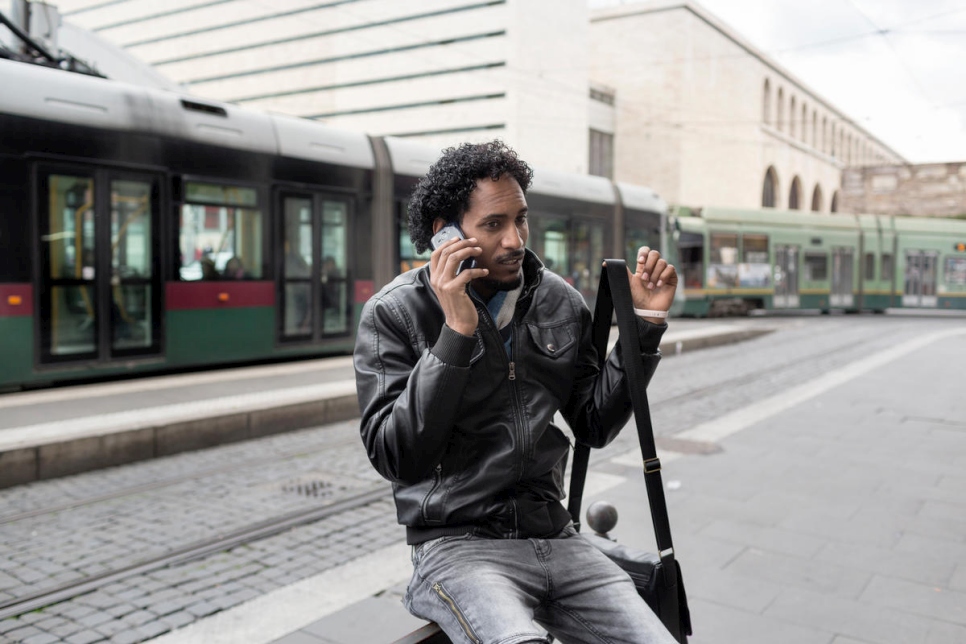 |
| In Italy, Asmorom received refugee status and is currently enrolled in language school. © UNHCR/Alessandro Penso |
In October 2015, Asmorom was once more in the hands of smugglers, who
took him from Uganda to Sudan. In Sudan, he married and stayed for a few
months, but knew he could not stay without documents or security. In May 2016,
he left his wife behind for her own safety and departed towards Libya.
took him from Uganda to Sudan. In Sudan, he married and stayed for a few
months, but knew he could not stay without documents or security. In May 2016,
he left his wife behind for her own safety and departed towards Libya.
“In front of me was the Sahara for the second time,” he says. “I knew
very well I could die, but I wanted freedom and peace and decided to cross
again”.
very well I could die, but I wanted freedom and peace and decided to cross
again”.
In the middle of the desert, Asmorom and the group he was traveling with
were kidnapped and taken to Kufrah, Libya. He was forced to pay US$ 1,800 to
get to Tripoli, and there asked for an additional US$ 5,500. When he could not
pay, he was taken to a warehouse where 1,500 refugees and migrants were kept in
one large room.
were kidnapped and taken to Kufrah, Libya. He was forced to pay US$ 1,800 to
get to Tripoli, and there asked for an additional US$ 5,500. When he could not
pay, he was taken to a warehouse where 1,500 refugees and migrants were kept in
one large room.
“It is difficult to describe the conditions we were kept in. Try to
imagine 1,500 people living, eating, sleeping and defecating in one large room.
The food we were given was simply not enough and my friends and I were already
debilitated from all these years of trying to survive, from Israel and from the
crossing.”
imagine 1,500 people living, eating, sleeping and defecating in one large room.
The food we were given was simply not enough and my friends and I were already
debilitated from all these years of trying to survive, from Israel and from the
crossing.”
“It is difficult to describe the conditions.”
“We were ill and we were hungry. Two of my friends did not survive, I
watched them die in the warehouse. This for me is very difficult to talk about
– I still cannot sleep at night because of this”.
watched them die in the warehouse. This for me is very difficult to talk about
– I still cannot sleep at night because of this”.
In October 2016, Asmorom finally made it to the coast and set sail for
Italy. Crossing the Mediterranean Sea in a small wooden boat with 800 people on
board almost felt easy compared to the ordeal he had been through for seven
years.
Italy. Crossing the Mediterranean Sea in a small wooden boat with 800 people on
board almost felt easy compared to the ordeal he had been through for seven
years.
The boat was rescued by an NGO and its passengers disembarked in a port
near Naples, Italy. “The moment I arrived to Italy I knew I no longer had to
live in fear,” says Asmorom. “I had gambled with life and survived.”
near Naples, Italy. “The moment I arrived to Italy I knew I no longer had to
live in fear,” says Asmorom. “I had gambled with life and survived.”
In Italy, Asmorom received refugee status and is currently enrolled in
language school, determined to find his place in society and hoping to be
reunited with his wife. However, he says he will never be able to put what he
has been through behind him.
language school, determined to find his place in society and hoping to be
reunited with his wife. However, he says he will never be able to put what he
has been through behind him.
“I would like for my friends names to be written down,” he says. “Ibra
and Tesfalem were their names, they would be 28 today. It is only because I
survived that their families were able to find out what happened to their
sons.”
and Tesfalem were their names, they would be 28 today. It is only because I
survived that their families were able to find out what happened to their
sons.”
“So many people are unaccounted for. The families still call me today,
as they could not get the bodies back, and for closure they ask me for
information – Were they sick? Were they given food? Were they beaten? It is for
them that I am telling my story and I would like for as many people as possible
to know what has happened.”
as they could not get the bodies back, and for closure they ask me for
information – Were they sick? Were they given food? Were they beaten? It is for
them that I am telling my story and I would like for as many people as possible
to know what has happened.”
The UN Refugee Agency in Geneva released a very important
testimonial verifying Israel and Rwanda’s human trafficking system and
deportation agreement עכשיו אף אחד כבר לא יוכל להכחיש: ישראל
ורואנדה מפרות את החוק הבינלאומי וסוחרות בפליטים
testimonial verifying Israel and Rwanda’s human trafficking system and
deportation agreement עכשיו אף אחד כבר לא יוכל להכחיש: ישראל
ורואנדה מפרות את החוק הבינלאומי וסוחרות בפליטים
Rwandan officials recently
denied #Refugees4Sale deal with Israel exists. Yesterday, they denied that any deportees
from Israel have arrived at Rwanda (other than several individuals coming on
their own accord).
denied #Refugees4Sale deal with Israel exists. Yesterday, they denied that any deportees
from Israel have arrived at Rwanda (other than several individuals coming on
their own accord).
The UNHCR’s publication yesterday
verifies several serious claims against Israel and Rwanda:
verifies several serious claims against Israel and Rwanda:
1. Israel deports refugees to
states of origin or to unsafe third states. This is the first time the UNHCR
confirms that Rwanda is the third state. This is also the first time that the UNHCR
states that Israel deports refugees to their state of origin, a blatant
violation of the non refoulement principle of international law.
states of origin or to unsafe third states. This is the first time the UNHCR
confirms that Rwanda is the third state. This is also the first time that the UNHCR
states that Israel deports refugees to their state of origin, a blatant
violation of the non refoulement principle of international law.
2. Israeli and Rwandan authorities
collaborate in what the UNHCR calls a ‘relocation scheme’
collaborate in what the UNHCR calls a ‘relocation scheme’
3. Israeli and Rwandan authorities
are implicated in human trafficking. See this testimonial endorsed and verified
by the UNHCR:
are implicated in human trafficking. See this testimonial endorsed and verified
by the UNHCR:
“Once in Rwanda, he and the
nine other Eritrean refugees he had been travelling with were met by local
authorities and transferred to a hotel.
nine other Eritrean refugees he had been travelling with were met by local
authorities and transferred to a hotel.
I was given no information, my
Israeli documents were taken from me and I received nothing, no papers, no
explanation whatsoever on what was going to happen,” says Asmorom. “I was
scared. The word on the street was that we were not safe in the hotel because
everyone knew that refugees coming from Israel were carrying large sums of
money. We stayed one night, and then the whole group decided to leave and run
to Uganda In October 2015, Asmorom was once more in the hands of smugglers, who
took him from Uganda to Sudan..”
Israeli documents were taken from me and I received nothing, no papers, no
explanation whatsoever on what was going to happen,” says Asmorom. “I was
scared. The word on the street was that we were not safe in the hotel because
everyone knew that refugees coming from Israel were carrying large sums of
money. We stayed one night, and then the whole group decided to leave and run
to Uganda In October 2015, Asmorom was once more in the hands of smugglers, who
took him from Uganda to Sudan..”
UNHCR GENEVA IS EXPOSING ISRAEL
AND RWANDA’S #Refugees4Sale Please share! Full UNHCR statement
AND RWANDA’S #Refugees4Sale Please share! Full UNHCR statement
Posted in Blog
