It is almost
surrealistic. Israeli paramilitary
police raid the Makassed hospital in Arab East Jerusalem firing rubber bullets,
sound grenades and tear gas. Can you
imagine t his scene happening to a Jewish hospital in Israel? If you expecting to see this on the BBC don’t
hold your breath. Only Palestinian violence
is newsworthy.
surrealistic. Israeli paramilitary
police raid the Makassed hospital in Arab East Jerusalem firing rubber bullets,
sound grenades and tear gas. Can you
imagine t his scene happening to a Jewish hospital in Israel? If you expecting to see this on the BBC don’t
hold your breath. Only Palestinian violence
is newsworthy.
Tony Greenstein
Allison
Deger on October 31, 2015 5
Comments
Deger on October 31, 2015 5
Comments
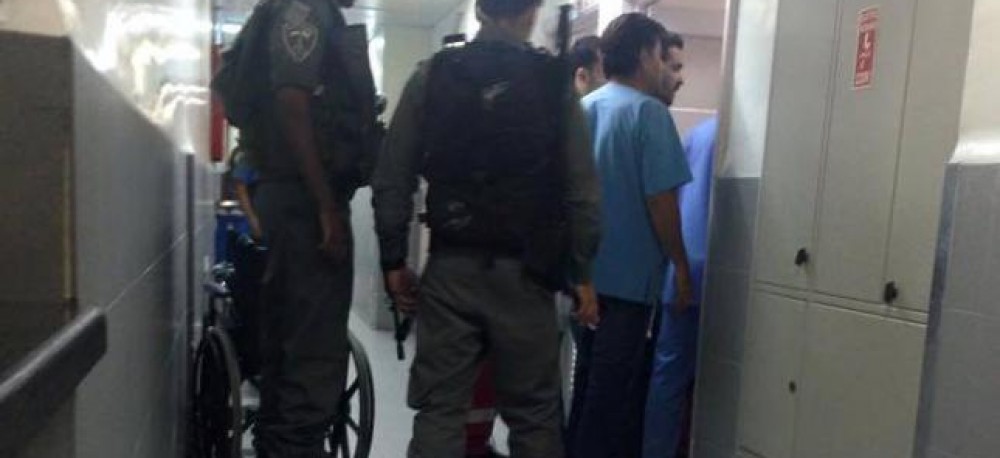 |
| Israeli border police enter Makassed hospital in East Jerusalem. (Photo: al-Ray) |
Amid weeks of violence in Jerusalem, Israeli police
and special forces raided an East Jerusalem hospital for a third day in a
row on Thursday and fired tear gas, sound grenades and rubber bullets into the
medical compound, injuring three patients.
and special forces raided an East Jerusalem hospital for a third day in a
row on Thursday and fired tear gas, sound grenades and rubber bullets into the
medical compound, injuring three patients.
Israeli police first burst into Makassed hospital
in the Mount of Olives neighborhood on Tuesday with a court order to confiscate
the medical records of a 16-year old patient who was treated on October 13th
for injuries from a gunshot wound.
in the Mount of Olives neighborhood on Tuesday with a court order to confiscate
the medical records of a 16-year old patient who was treated on October 13th
for injuries from a gunshot wound.
“They were not trying to confirm that he was
shot—because they have him [the patient] in custody and so they know he was
shot and they can confirm the bullet wound, but they wanted to see who was with
him, who came in with him to the hospital,” said Dr. Rafiq Hussein, the
director of Makassed hospital, who questioned why police undertook a
militarized operation inside of his facility. “They were after not a dangerous
person, or a wanted person, only a file,” he noted.
shot—because they have him [the patient] in custody and so they know he was
shot and they can confirm the bullet wound, but they wanted to see who was with
him, who came in with him to the hospital,” said Dr. Rafiq Hussein, the
director of Makassed hospital, who questioned why police undertook a
militarized operation inside of his facility. “They were after not a dangerous
person, or a wanted person, only a file,” he noted.
The following day police returned to the hospital
in increased numbers. Hussein said hospital staff were unable to tend to
patients as 40 to 50 masked officers again ran into the hospital seeking
security footage and interviews with the staff who treated the injured minor.
in increased numbers. Hussein said hospital staff were unable to tend to
patients as 40 to 50 masked officers again ran into the hospital seeking
security footage and interviews with the staff who treated the injured minor.
“They stopped what they were doing because police had
come into the middle of the hospital. There was almost a clash between the
staff and the Israeli police, because this is a hospital and they [the police]
should not have been here,” Hussein said.
come into the middle of the hospital. There was almost a clash between the
staff and the Israeli police, because this is a hospital and they [the police]
should not have been here,” Hussein said.
Two doctors were taken to a nearby police station
where they were questioned about the individuals who accompanied the wounded
16-year old patient, according to Hussein. Police requested an additional four
nurses report for interviews over the weekend. Several medical staff were
questioned inside of the hospital.
where they were questioned about the individuals who accompanied the wounded
16-year old patient, according to Hussein. Police requested an additional four
nurses report for interviews over the weekend. Several medical staff were
questioned inside of the hospital.
“They have asked about he shifts and the name of
everyone who was on the shifts, their ID number and telephone numbers,” Hussein
said. “They confiscated the hard disk of the camera system, they took it, and
they now asked for interrogations with our nurses.”
everyone who was on the shifts, their ID number and telephone numbers,” Hussein
said. “They confiscated the hard disk of the camera system, they took it, and
they now asked for interrogations with our nurses.”
On
Thursday doctors and nurses held a demonstration in the gated courtyard of
Makassed hospital in protest of the police entry, which they said disrupted
their ability to care for patients. Hussein indicated all hospital
personnel complied with the court order, appearing for depositions and turning
over the requested file and security footage.
Thursday doctors and nurses held a demonstration in the gated courtyard of
Makassed hospital in protest of the police entry, which they said disrupted
their ability to care for patients. Hussein indicated all hospital
personnel complied with the court order, appearing for depositions and turning
over the requested file and security footage.
Amid weeks of violence in Jerusalem, Israeli police
and special forces raided an East Jerusalem hospital for a third day in a
row on Thursday and fired tear gas, sound grenades and rubber bullets into the
medical compound, injuring three patients.
and special forces raided an East Jerusalem hospital for a third day in a
row on Thursday and fired tear gas, sound grenades and rubber bullets into the
medical compound, injuring three patients.
Israeli police first burst into Makassed hospital
in the Mount of Olives neighborhood on Tuesday with a court order to confiscate
the medical records of a 16-year old patient who was treated on October 13th
for injuries from a gunshot wound.
in the Mount of Olives neighborhood on Tuesday with a court order to confiscate
the medical records of a 16-year old patient who was treated on October 13th
for injuries from a gunshot wound.
“They were not trying to confirm that he was
shot—because they have him [the patient] in custody and so they know he was
shot and they can confirm the bullet wound, but they wanted to see who was with
him, who came in with him to the hospital,” said Dr. Rafiq Hussein, the
director of Makassed hospital, who questioned why police undertook a
militarized operation inside of his facility. “They were after not a dangerous
person, or a wanted person, only a file,” he noted.
shot—because they have him [the patient] in custody and so they know he was
shot and they can confirm the bullet wound, but they wanted to see who was with
him, who came in with him to the hospital,” said Dr. Rafiq Hussein, the
director of Makassed hospital, who questioned why police undertook a
militarized operation inside of his facility. “They were after not a dangerous
person, or a wanted person, only a file,” he noted.
The following day police returned to the hospital
in increased numbers. Hussein said hospital staff were unable to tend to
patients as 40 to 50 masked officers again ran into the hospital seeking
security footage and interviews with the staff who treated the injured minor.
in increased numbers. Hussein said hospital staff were unable to tend to
patients as 40 to 50 masked officers again ran into the hospital seeking
security footage and interviews with the staff who treated the injured minor.
“They stopped what they were doing because police had
come into the middle of the hospital. There was almost a clash between the
staff and the Israeli police, because this is a hospital and they [the police]
should not have been here,” Hussein said.
come into the middle of the hospital. There was almost a clash between the
staff and the Israeli police, because this is a hospital and they [the police]
should not have been here,” Hussein said.
Two doctors were taken to a nearby police station
where they were questioned about the individuals who accompanied the wounded
16-year old patient, according to Hussein. Police requested an additional four
nurses report for interviews over the weekend. Several medical staff were
questioned inside of the hospital.
where they were questioned about the individuals who accompanied the wounded
16-year old patient, according to Hussein. Police requested an additional four
nurses report for interviews over the weekend. Several medical staff were
questioned inside of the hospital.
“They have asked about he shifts and the name of
everyone who was on the shifts, their ID number and telephone numbers,” Hussein
said. “They confiscated the hard disk of the camera system, they took it, and
they now asked for interrogations with our nurses.”
everyone who was on the shifts, their ID number and telephone numbers,” Hussein
said. “They confiscated the hard disk of the camera system, they took it, and
they now asked for interrogations with our nurses.”
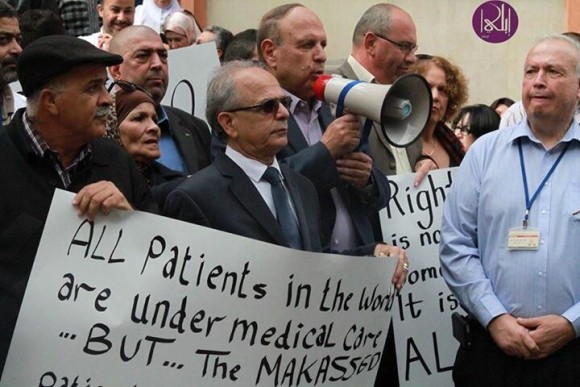
On Thursday doctors and nurses held a demonstration in
the gated courtyard of Makassed hospital in protest of the police entry, which
they said disrupted their ability to care for patients. Hussein indicated
all hospital personnel complied with the court order, appearing for depositions
and turning over the requested file and security footage. “We were protesting because of the two-day of
incursions by the police, so then police came in. They started to shoot tear
gas, sound bombs and rubber bullets inside of the hospital premises,” Hussein
said. “There were a couple of patients who were hit by rubber bullets
actually.”
the gated courtyard of Makassed hospital in protest of the police entry, which
they said disrupted their ability to care for patients. Hussein indicated
all hospital personnel complied with the court order, appearing for depositions
and turning over the requested file and security footage. “We were protesting because of the two-day of
incursions by the police, so then police came in. They started to shoot tear
gas, sound bombs and rubber bullets inside of the hospital premises,” Hussein
said. “There were a couple of patients who were hit by rubber bullets
actually.”
Palestinian media reported that three patients not
participating in the medical staff demonstration were shot with rubber bullets
during the demonstration.
participating in the medical staff demonstration were shot with rubber bullets
during the demonstration.
“This is the first time in a long time that they
police enter in large number, masked, with guns to look for information,”
Hussein said, “Well of course this was carried out during the Intifada
[Palestinian uprising], it was the same, but now this is new to East
Jerusalem.”
police enter in large number, masked, with guns to look for information,”
Hussein said, “Well of course this was carried out during the Intifada
[Palestinian uprising], it was the same, but now this is new to East
Jerusalem.”
 |
| Hospital staff protest Israeli border police entering Makassed hospital in East Jerusalem, October 29, 2015. (Photo: Dr. Rafiq Hussein) |
Israeli police also erected a checkpoint last week
outside of Makassed hospital’s sister facility, Augusta Victoria hospital,
located a half-mile away on the Mount of Olives. The crossing is one of more
than a dozen new checkpoints built across East Jerusalem neighborhoods in
recent weeks, during which Israeli forces have killed more than 60
Palestinians, and Palestinians killed ten Israelis in attacks.
outside of Makassed hospital’s sister facility, Augusta Victoria hospital,
located a half-mile away on the Mount of Olives. The crossing is one of more
than a dozen new checkpoints built across East Jerusalem neighborhoods in
recent weeks, during which Israeli forces have killed more than 60
Palestinians, and Palestinians killed ten Israelis in attacks.
 |
| Hospital staff protest Israeli border police entering Makassed hospital in East Jerusalem, October 29, 2015. (Photo: Dr. Rafiq Hussein) |
A
group representing six East Jerusalem hospitals said in a statement last
week that the checkpoints prevent ambulances from leaving and entering the
facility with speed and are “a major obstacle to the medical and humanitarian
work.”
group representing six East Jerusalem hospitals said in a statement last
week that the checkpoints prevent ambulances from leaving and entering the
facility with speed and are “a major obstacle to the medical and humanitarian
work.”
“These
concrete barriers/roadblocks have led to major delays in the arrival of
patients and their companions to their hospitals’ destination, employees and medical
staff such as doctors and nurses, as well as to the disruption and delay of the
patients’ movement from one hospital to another,” said the East Jerusalem
Hospitals Network.
concrete barriers/roadblocks have led to major delays in the arrival of
patients and their companions to their hospitals’ destination, employees and medical
staff such as doctors and nurses, as well as to the disruption and delay of the
patients’ movement from one hospital to another,” said the East Jerusalem
Hospitals Network.
Posted in Blog
