
An interesting article on the largest Jewish community
in the Middle East outside Israel. It’s
strange that a country that is pilloried as run by the ‘new Nazis’ happens to
have a Jewish community that, unlike Nazi Germany, has a representative in
their Parliament and is remarkably free.
Unfortunately, in the hands of Zionism, ‘anti-Semitism’ is a malleable
instrument.
in the Middle East outside Israel. It’s
strange that a country that is pilloried as run by the ‘new Nazis’ happens to
have a Jewish community that, unlike Nazi Germany, has a representative in
their Parliament and is remarkably free.
Unfortunately, in the hands of Zionism, ‘anti-Semitism’ is a malleable
instrument.
Of course Iranian Jews do not have full equality with Moslem Iranians although it would seem to be much greater than that which Arabs experience in Israel. However within the context of a repressive society for Muslims too, with one of the world’s highest execution rates, Iran’s Jewish community is living proof of the lies of Zionism.
Tony Greenstein
How Iran’s Jews Survive in Mullahs’ World
The first
thing I noticed about Shahab Shahamifar as we strolled to synagogue on a
Saturday morning in July was his yarmulke. It was a medium-size, black knitted
one, and he was wearing it as we walked the busy streets of Tehran.
thing I noticed about Shahab Shahamifar as we strolled to synagogue on a
Saturday morning in July was his yarmulke. It was a medium-size, black knitted
one, and he was wearing it as we walked the busy streets of Tehran.
Then I
noticed that no one looked up.
noticed that no one looked up.
Later,
when the rabbi went on a bit too long with a sermon on the week’s haftara
portion, I left services early, and Shahamifar rushed out to accompany me the
first block or so before returning to pray. This time, in addition to his
yarmulke he wore a long tallit, a prayer shawl, also with no sense of
self-consciousness.
when the rabbi went on a bit too long with a sermon on the week’s haftara
portion, I left services early, and Shahamifar rushed out to accompany me the
first block or so before returning to pray. This time, in addition to his
yarmulke he wore a long tallit, a prayer shawl, also with no sense of
self-consciousness.
 |
|
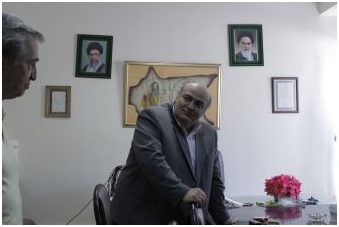
Dr. Siamak Moreh Sedgh, the Jewish community’s elected representative in Iran’s parliament Image: Larry Cohler-Esses
Saturday
is a workday in Iran’s capital, and women in chadors and men in business suits hurried by us without so much as a glance. Moreover, the night before, when several hundred worshippers gathered for Friday night services at the Yousef Abad Synagogue in North Tehran, I noticed, too, that the sanctuary’s large entrance remained open to the street as people spilled out for breaks to shmooze in crowds on the sidewalk outside. No security of any kind was in sight. |
“Compared
to Europe,” boasted Dr. Siamak Moreh Sedgh, the Jewish community’s elected
representative in Iran’s parliament, “synagogues here are one of the safest
places.” He also said proudly, “We have a high rate of people following
Halacha,” or traditional Jewish law, “and a low rate of assimilation. The rate
of intermarriage among Iranian Jews is less than 1%.”
to Europe,” boasted Dr. Siamak Moreh Sedgh, the Jewish community’s elected
representative in Iran’s parliament, “synagogues here are one of the safest
places.” He also said proudly, “We have a high rate of people following
Halacha,” or traditional Jewish law, “and a low rate of assimilation. The rate
of intermarriage among Iranian Jews is less than 1%.”
Of
course, there are a lot fewer Jews now than before Iran’s 1979 Revolution.
course, there are a lot fewer Jews now than before Iran’s 1979 Revolution.
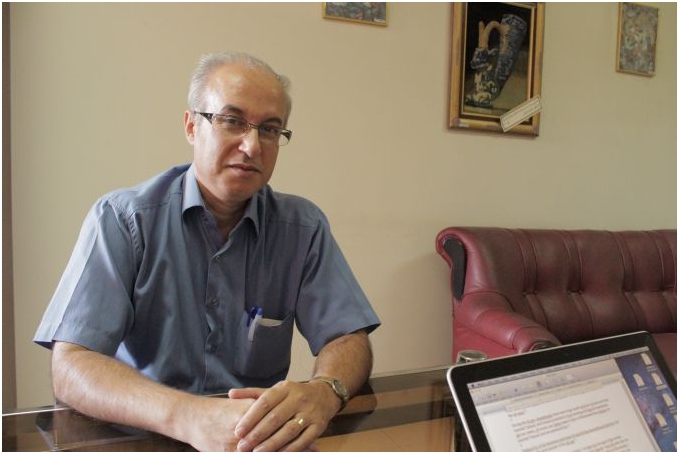 |
| Homayon Najafabadi, the Executive Director of Tehran Jewish Committee Image: Larry Cohler-Esses |
Homayoun
Sameyah Najafabadi, the current chair of the Tehran Jewish Committee, Iranian
Jewry’s central body, told me there were just 9,000 Jews, citing Iranian
government census data on which people must list their religion. Other Jewish
leaders insisted there were something like 18,000 to 20,000. They based their
estimates on their knowledge of communal affiliations in Iran’s various cities.
Either way, that’s a big drop from the 80,000 to 100,000 Jews that lived in
Iran prior to 1979.
Sameyah Najafabadi, the current chair of the Tehran Jewish Committee, Iranian
Jewry’s central body, told me there were just 9,000 Jews, citing Iranian
government census data on which people must list their religion. Other Jewish
leaders insisted there were something like 18,000 to 20,000. They based their
estimates on their knowledge of communal affiliations in Iran’s various cities.
Either way, that’s a big drop from the 80,000 to 100,000 Jews that lived in
Iran prior to 1979.
Many of
these Jews left in the months immediately after the fall of the shah. A largely
business-oriented community, its members often maintained ties to Israel under
the shah. Many were shocked into flight when Habib
Elghanian , one of
the country’s leading businessmen and philanthropists — and the titular head of
their community — was executed by a firing squad on charges that included
“contacts with Israel and Zionism.”
these Jews left in the months immediately after the fall of the shah. A largely
business-oriented community, its members often maintained ties to Israel under
the shah. Many were shocked into flight when Habib
Elghanian , one of
the country’s leading businessmen and philanthropists — and the titular head of
their community — was executed by a firing squad on charges that included
“contacts with Israel and Zionism.”
In 1998,
another Jew, Ruhollah Kadkhodah-Zadeh, was executed, reportedly for helping Jews
to emigrate illegally.
another Jew, Ruhollah Kadkhodah-Zadeh, was executed, reportedly for helping Jews
to emigrate illegally.
Shortly
after this, restrictions on emigration were lifted. So those who live in Iran
today are choosing to do so. Even cash bonus offers from Israel ranging from $10,000 for
individuals to $61,000 for families have failed to move those now living there
to leave.
after this, restrictions on emigration were lifted. So those who live in Iran
today are choosing to do so. Even cash bonus offers from Israel ranging from $10,000 for
individuals to $61,000 for families have failed to move those now living there
to leave.
According
to Moreh Sedgh, those who have stayed are primarily members of the middle class
— shop owners, small businessmen and professionals. “The rich had the money to
move to America and re-establish themselves there,” he said. “The poor, who had
nothing to lose, moved to Israel.” But Najafabadi assured me that a strong
contingent of the poor remained among Iran’s Jews.
to Moreh Sedgh, those who have stayed are primarily members of the middle class
— shop owners, small businessmen and professionals. “The rich had the money to
move to America and re-establish themselves there,” he said. “The poor, who had
nothing to lose, moved to Israel.” But Najafabadi assured me that a strong
contingent of the poor remained among Iran’s Jews.
“We have
people who receive charity from the community, including meat, rice and fruit,”
he said.
people who receive charity from the community, including meat, rice and fruit,”
he said.
Those
making the choice to stay, even as their leaders bristle with hostility toward
Zionism and the State of Israel, live under an umbrella of government
protection.
making the choice to stay, even as their leaders bristle with hostility toward
Zionism and the State of Israel, live under an umbrella of government
protection.
 |
|
Image: Larry Cohler-Esses Jewish hospital
And
Jewish life in Iran can be rich. In Tehran alone there are 13 active synagogues, five Jewish schools, two kindergartens and a 100-bed Jewish hospital, where Moreh Sedgh serves as director. There are active communities in several other cities, including Shiraz, Isfahan and Kermanshah, with institutions of their own. |
But
living as protected second-class citizens under a Shiite Islamist regime is
complicated.
living as protected second-class citizens under a Shiite Islamist regime is
complicated.
As
Najafabadi put it: “There is no oppression. But there are limitations.”
Najafabadi put it: “There is no oppression. But there are limitations.”
Working
in the Jews’ favor is the deeply embedded nature of their presence in Iranian
society, where they have never been ghettoized, and in which they are seen —
and see themselves — as pre-eminently Iranian, woven into 2,700 years of Iranian
history. This facilitates the rigid compartmentalization the government
maintains between Zionists, who are seen as a malign outside force, and the
unquestioned indigenous character of their own Jewish citizens.
in the Jews’ favor is the deeply embedded nature of their presence in Iranian
society, where they have never been ghettoized, and in which they are seen —
and see themselves — as pre-eminently Iranian, woven into 2,700 years of Iranian
history. This facilitates the rigid compartmentalization the government
maintains between Zionists, who are seen as a malign outside force, and the
unquestioned indigenous character of their own Jewish citizens.
But
implicitly, this also means Iranian Jews must take care not to be seen as
interested or involved in Israel, though it is an open secret that many have
family there, and that many have even visited Israel themselves via third
countries.
implicitly, this also means Iranian Jews must take care not to be seen as
interested or involved in Israel, though it is an open secret that many have
family there, and that many have even visited Israel themselves via third
countries.
The Jews’
security is aided by a fatwa that Ayatollah Ruhollah Khomeini, the Islamic
Republic’s founder, issued shortly after he came to power. Even as he shifted
Iran into an anti-Israel mode, his fatwa declared Iran’s Jews to be a fully
protected minority community and forbade any attacks on them.
security is aided by a fatwa that Ayatollah Ruhollah Khomeini, the Islamic
Republic’s founder, issued shortly after he came to power. Even as he shifted
Iran into an anti-Israel mode, his fatwa declared Iran’s Jews to be a fully
protected minority community and forbade any attacks on them.
But Jews’
place in Iranian society is perhaps vouchsafed most by the Jewish community’s
own willingness to fight for its right to that place. Its leaders do so while
avoiding any challenge to the fundamental legitimacy of Iran’s regime. But it
is not a quiet or quiescent Jewish leadership.
place in Iranian society is perhaps vouchsafed most by the Jewish community’s
own willingness to fight for its right to that place. Its leaders do so while
avoiding any challenge to the fundamental legitimacy of Iran’s regime. But it
is not a quiet or quiescent Jewish leadership.
 |
|
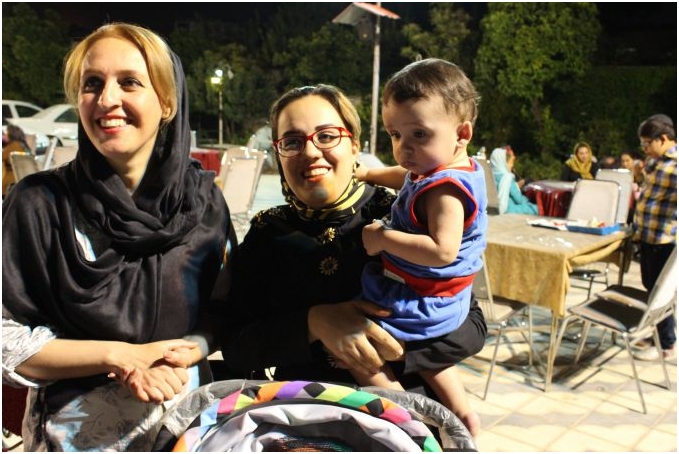
Image: Larry Cohler-Esses – Shiraz Jewish compound
|
When
then-president Mahmoud Ahmadinejad questioned the historical reality of the
Holocaust during his tenure, Jews and others worldwide denounced his
statements. But so did Haroun Yashayaei, who was then head of the Tehran Jewish
Committee.
then-president Mahmoud Ahmadinejad questioned the historical reality of the
Holocaust during his tenure, Jews and others worldwide denounced his
statements. But so did Haroun Yashayaei, who was then head of the Tehran Jewish
Committee.
“How is
it possible to ignore all the undeniable evidence existing for the killing and
exile of the Jews in Europe during World War II?” he asked Ahmadinejad in an official letter he wrote the president as head
of the committee. Yashayaei condemned Ahmadinejad’s reference to the Holocaust
as “a myth,” describing it as “an infected wound for Western civilization.”
it possible to ignore all the undeniable evidence existing for the killing and
exile of the Jews in Europe during World War II?” he asked Ahmadinejad in an official letter he wrote the president as head
of the committee. Yashayaei condemned Ahmadinejad’s reference to the Holocaust
as “a myth,” describing it as “an infected wound for Western civilization.”
Maurice
Motamed, who at the time represented the Jewish community in Iran’s parliament,
told a reporter for the Persian service of Radio Free Europe/Radio Liberty,
“Denial of such a great historical tragedy that is connected to the Jewish
community can only be considered an insult to all the world’s Jewish
communities.”
Motamed, who at the time represented the Jewish community in Iran’s parliament,
told a reporter for the Persian service of Radio Free Europe/Radio Liberty,
“Denial of such a great historical tragedy that is connected to the Jewish
community can only be considered an insult to all the world’s Jewish
communities.”
In 2012,
when Ahmadinejad’s first vice president, Mohammad Reza Rahimi, claimed at a
United Nations drug conference that the Talmud teaches “how to destroy
non-Jews so as to protect an embryo in the womb of a Jewish mother” and charged
that Zionists controlled the world’s illicit drug trade, the community also
condemned his remarks.
when Ahmadinejad’s first vice president, Mohammad Reza Rahimi, claimed at a
United Nations drug conference that the Talmud teaches “how to destroy
non-Jews so as to protect an embryo in the womb of a Jewish mother” and charged
that Zionists controlled the world’s illicit drug trade, the community also
condemned his remarks.
During
Ahmadinejad’s tenure, “there were huge insults toward our religion,” Najafabadi
recalled. “He insulted Talmud. And we answered him.”
Ahmadinejad’s tenure, “there were huge insults toward our religion,” Najafabadi
recalled. “He insulted Talmud. And we answered him.”
Outbursts
of anti-Semitism did not just stop with Ahmadinejad’s departure in 2013.
of anti-Semitism did not just stop with Ahmadinejad’s departure in 2013.
Just last
April, Alef, a
prominent Iranian website run by Ahmad Tavakkoli, a conservative
April, Alef, a
prominent Iranian website run by Ahmad Tavakkoli, a conservative
Member of
Parliament, cited Israel’s treatment of the Palestinians and argued: “Blood
shedding by Jews is not a new theme…. By examining Jewish history in past
centuries, it becomes evident that they insist on blood shedding and even
bloodthirstiness based on their altered religion and teachings.”
Parliament, cited Israel’s treatment of the Palestinians and argued: “Blood
shedding by Jews is not a new theme…. By examining Jewish history in past
centuries, it becomes evident that they insist on blood shedding and even
bloodthirstiness based on their altered religion and teachings.”
Nevertheless,
the community is vocal about the multiple forms of discrimination under which
its members live — but without questioning the legitimacy of the regime or the
system of Sharia, or Islamic law, by which it governs.
the community is vocal about the multiple forms of discrimination under which
its members live — but without questioning the legitimacy of the regime or the
system of Sharia, or Islamic law, by which it governs.
 |
| Image: Larry Cohler-Esses |
Their
approach could be seen in what community leaders consider one of their biggest
recent victories: gaining equality in “blood money” compensation. That’s the
amount a person must pay to a family when he is responsible for an accident
that caused a family member’s death.
approach could be seen in what community leaders consider one of their biggest
recent victories: gaining equality in “blood money” compensation. That’s the
amount a person must pay to a family when he is responsible for an accident
that caused a family member’s death.
“We
succeeded in getting blood money compensation equalized for minorities,”
succeeded in getting blood money compensation equalized for minorities,”
Motamed
said. “Before, there was a big difference between the money for minorities and
the main population…. It was a very big achievement.”
said. “Before, there was a big difference between the money for minorities and
the main population…. It was a very big achievement.”
But the
community’s approach did not involve any criticism of Sharia, which rules on
such matters. Instead, Motamed, recalled, “We consulted a lot of ayatollahs and
took testimony from high-ranking clerics to show there must be equality” under
Sharia.
community’s approach did not involve any criticism of Sharia, which rules on
such matters. Instead, Motamed, recalled, “We consulted a lot of ayatollahs and
took testimony from high-ranking clerics to show there must be equality” under
Sharia.
Pleased
as he was, Motamed noted that blood money compensation for non-Muslims remains
unequal in cases of murder — and that they are continuing to push on this.
as he was, Motamed noted that blood money compensation for non-Muslims remains
unequal in cases of murder — and that they are continuing to push on this.
“Under
Sharia… if a Muslim kills a Jew, there will be blood money payment. But if a
Jew kills a Muslim, the penalty is execution,” he said. Here, too, “we’ve
consulted with a lot of ayatollahs and gotten letters. But it’s still not
solved.”
Sharia… if a Muslim kills a Jew, there will be blood money payment. But if a
Jew kills a Muslim, the penalty is execution,” he said. Here, too, “we’ve
consulted with a lot of ayatollahs and gotten letters. But it’s still not
solved.”
Other
unresolved issues the leaders cited involved access to high-ranking posts in
government ministries and the requirement that a Muslim serve as principal at
Jewish schools.
unresolved issues the leaders cited involved access to high-ranking posts in
government ministries and the requirement that a Muslim serve as principal at
Jewish schools.
“We have
five schools,” Najafabadi said, “and the principals in all of them are Muslim.
There’s no enmity. They’re very cooperative. But it’s kind of insulting.”
five schools,” Najafabadi said, “and the principals in all of them are Muslim.
There’s no enmity. They’re very cooperative. But it’s kind of insulting.”
Then
there is inheritance law: Under Sharia in Iran, if one sibling in a non-Muslim
family converts to Islam, he inherits the entirety of his parents’ assets.
This, too, community leaders are pushing to change.
there is inheritance law: Under Sharia in Iran, if one sibling in a non-Muslim
family converts to Islam, he inherits the entirety of his parents’ assets.
This, too, community leaders are pushing to change.
 |
|
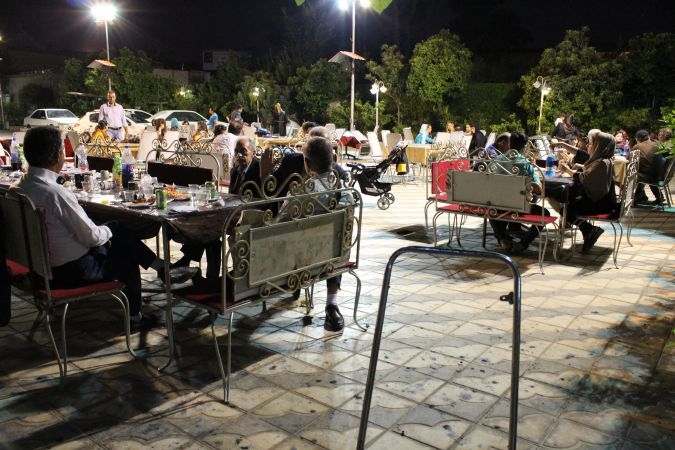
Shiraz Jewish compound – Image: Larry Cohler-Esses
|
On
Israel, the community’s leadership must be more circumspect. But it is no
secret that many in the community have family there, or that a significant
number of Jews in Iran have visited Israel themselves. One teenager in Shiraz
told me how excited he had been to visit three years ago.
Israel, the community’s leadership must be more circumspect. But it is no
secret that many in the community have family there, or that a significant
number of Jews in Iran have visited Israel themselves. One teenager in Shiraz
told me how excited he had been to visit three years ago.
“There
are people traveling to Israel,” Najafabadi volunteered. But since the Gaza War
of last summer, the government had clamped down, he said. Some who go are
imprisoned, fined and interrogated. Two community members had been sentenced to
91 days, though this was later reduced to 20 days. Travel to Israel “is
declining now because of these problems,” he said.
are people traveling to Israel,” Najafabadi volunteered. But since the Gaza War
of last summer, the government had clamped down, he said. Some who go are
imprisoned, fined and interrogated. Two community members had been sentenced to
91 days, though this was later reduced to 20 days. Travel to Israel “is
declining now because of these problems,” he said.
Moreh
Sedgh even voiced concern for Israel, in his way — his way being to criticize
Israel’s policies as harmful for Israel’s own interests.
Sedgh even voiced concern for Israel, in his way — his way being to criticize
Israel’s policies as harmful for Israel’s own interests.
Speaking
about Israel’s policy of opposing Syria’s regime under Bashar al-Assad, which
Iran supports, Moreh Sedgh said, “The main enemy of Israel today is Daesh” — a
reference to the extremist Islamic State fighting to oust Assad. “Of course,
the Assad family are not the ideal leaders for Syria,” he said. But he noted
that if Assad is ousted, they “must be ready for ISIS. What benefit for Israel
would that be?”
about Israel’s policy of opposing Syria’s regime under Bashar al-Assad, which
Iran supports, Moreh Sedgh said, “The main enemy of Israel today is Daesh” — a
reference to the extremist Islamic State fighting to oust Assad. “Of course,
the Assad family are not the ideal leaders for Syria,” he said. But he noted
that if Assad is ousted, they “must be ready for ISIS. What benefit for Israel
would that be?”
Despite
all these issues, those Iranian Jews who choose to stay can live a very active
Jewish religious and communal life. My second-to-last night in Iran, I was
invited to meet with the local leaders of the Shiraz community in the large
open-air compound that serves as their community center. About the size of a
football field, the compound is surrounded by high walls that ensure the
privacy of those who come. Tables were spread out with ample food, and by 11
p.m., Jewish families totaling some 50 or 60 individuals, including children,
were dining and moving around from table to table to catch up on the local
gossip.
all these issues, those Iranian Jews who choose to stay can live a very active
Jewish religious and communal life. My second-to-last night in Iran, I was
invited to meet with the local leaders of the Shiraz community in the large
open-air compound that serves as their community center. About the size of a
football field, the compound is surrounded by high walls that ensure the
privacy of those who come. Tables were spread out with ample food, and by 11
p.m., Jewish families totaling some 50 or 60 individuals, including children,
were dining and moving around from table to table to catch up on the local
gossip.
 |
| Shiraz Jewish compound pizzeria – Image: Larry Cohler-Esses |
Told I
was a vegetarian, the community elders treated me to cheese pizza from the
kosher pizzeria on the premises. For meat eaters there was a kosher butcher.
And just about everyone used matzo from the matzo factory on the grounds during
Passover, I was told. The compound also contained a home for the elderly with
nine or 10 residents.
was a vegetarian, the community elders treated me to cheese pizza from the
kosher pizzeria on the premises. For meat eaters there was a kosher butcher.
And just about everyone used matzo from the matzo factory on the grounds during
Passover, I was told. The compound also contained a home for the elderly with
nine or 10 residents.
“We are a
country of paradox,” Moreh Sedgh said. Noting other recent communal victories,
such as permission to close Jewish schools on Saturday, the Jewish Sabbath,
rather than Friday, the Muslim day of rest, he said: “Sometimes we do something
and have some success…. We think all these problems can be solved as domestic
problems. If it comes from the outside. that will make it harder.”
country of paradox,” Moreh Sedgh said. Noting other recent communal victories,
such as permission to close Jewish schools on Saturday, the Jewish Sabbath,
rather than Friday, the Muslim day of rest, he said: “Sometimes we do something
and have some success…. We think all these problems can be solved as domestic
problems. If it comes from the outside. that will make it harder.”
Posted in Blog
